
Why Australia's Father's Day Doesn't Match Your Calendar Reminder
Published on September 7, 2026
If you've ever set a reminder for "Dad's gift" based on a US calendar app and then found out — usually from a slightly confused text from your father in Perth or Brisbane — that you were three months off, you're not alone. This mix-up happens constantly among people living outside Australia who still have family there, or Australians living abroad who assume the rest of the world follows their calendar.
Here's the short version: in the US, UK, and Canada, Father's Day lands on the third Sunday of June. In Australia, it's the first Sunday of September. Same holiday, same sentiment, completely different date — and if you're the kind of person managing gifts across two or three countries at once, that gap is exactly the sort of detail that trips people up.
This isn't really a "send a gift by this date" post. It's more useful than that. It's about understanding why the date is different, what that means for how you plan cross-border gifting throughout the year, and how to stop the wrong-country mix-ups before they happen.
The Actual Reason the Dates Don't Match
Most people assume it's a timezone thing, or that Australia is "behind" somehow. It's not that at all — it's seasonal.
Father's Day traditions in most English-speaking countries trace back to early 20th-century US observances, and June made sense there: it sits comfortably in late spring/early summer, away from other major gift occasions. When the tradition spread to Australia, several community groups (notably tied to the Anglican Home Mission in the 1930s) pushed for a local date that made more sense in the Southern Hemisphere's calendar — landing in early September, which is technically still late winter/early spring in Australia, but comfortably separated from Mother's Day (May) and the December holiday season.
So it's not an error, and it's not a quirk — it's a deliberate calendar choice that reflects how the occasion took root locally rather than being imported wholesale. New Zealand actually keeps the June date, which adds another layer of confusion if you have family scattered between Auckland and Adelaide.
Once you know this, the practical implication is simple: treat "Father's Day" as two separate events on your personal calendar, not one recurring reminder that fires once a year. If you have a dad, father-in-law, uncle, or grandfather in Australia, and another set of important men in the US or Canada, you're dealing with two entirely separate windows, four months apart.
Why This Actually Matters for How You Gift
If you're someone who sends things internationally — gift cards, care packages, flowers, whatever your family's version of "I'm thinking of you" looks like — a date mismatch like this isn't just a trivia fact. It's a planning risk.
Here's the scenario that plays out more often than you'd think: someone living in the US with an Australian parent sees "Father's Day" trending on social media or in retail emails in June, assumes it applies everywhere, and either sends something early (awkward — arrives with no occasion attached) or, worse, completely misses the actual September date because by then the moment has passed from their mental radar. The reverse happens too — Australians living in London or LA who assume their UK/US friends' dads get gifts in September, and end up four months late.
The fix isn't complicated, but it does require treating international family calendars differently than domestic ones. A few habits that actually help:
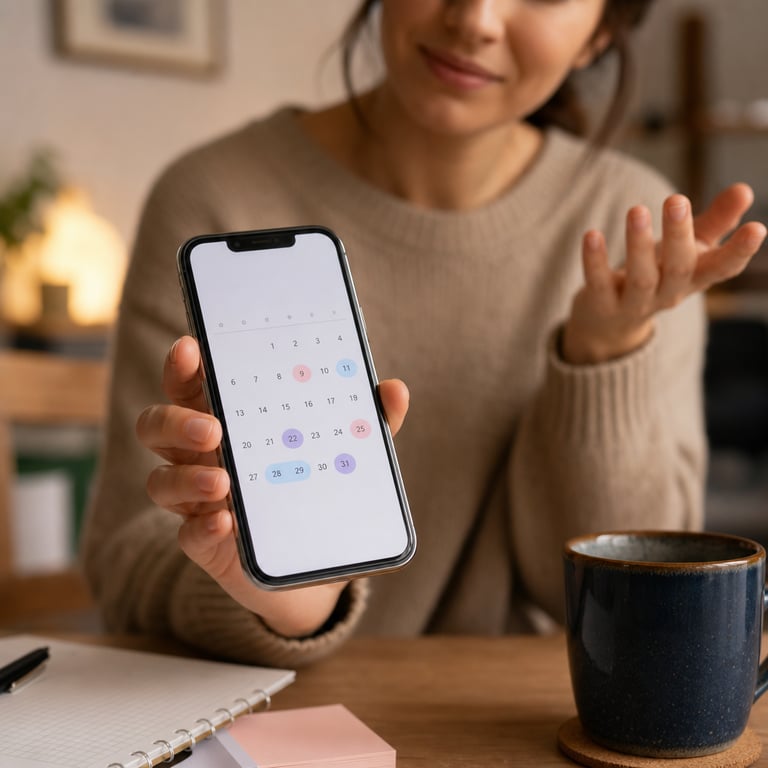
Separate your gift occasions by country, not by name. "Father's Day" as a single calendar entry is the root problem. If you're gifting across borders, it should be "Father's Day (AU) – September" and "Father's Day (US/UK/CA) – June" as two distinct entries, ideally with a two-week lead reminder before each.
Don't trust retail marketing as your date source. Because most gift retailers and marketplaces are headquartered in the US or UK, their June push is loud and hard to miss — but that same volume of marketing simply doesn't exist for the September date in most non-Australian markets. If you're relying on ads or emails to remind you, you'll structurally miss the Australian one. Set your own reminder instead.
Build in delivery-time buffers per country, not per occasion. A gift that ships domestically within Australia in early September behaves very differently from one being sent internationally into Australia. If you're sending physical goods, customs and regional delivery timelines vary a lot — inner Sydney and suburban Melbourne are fast, but regional Queensland or Tasmania can add several days. Digital options like eGift cards sidestep this almost entirely, which matters more than people think when the actual event date sneaks up on you.

The Broader Pattern: Australia's Calendar Runs on Its Own Logic
Father's Day is just the most visible example of a bigger pattern that catches people off guard: Australia's seasons are inverted, and a surprising number of "universal" occasions get locally adjusted as a result.
Christmas in Australia falls in the middle of summer — beach barbecues, not snow. Easter behaves the same everywhere since it's tied to a fixed liturgical calculation, but the cultural weight around it shifts (autumn imagery doesn't really land when it's actually early autumn heading into winter down there). And several public holidays that feel fixed elsewhere — like the King's Birthday — are observed on entirely different dates depending on the Australian state, which is its own rabbit hole if you're trying to time something around a public holiday.
The practical takeaway if you're gifting into Australia regularly: don't assume any occasion transfers 1:1 from your home country's calendar. It's worth spending ten minutes once a year mapping out the Australian-specific dates that matter to your family — birthdays aside, at minimum Mother's Day (early May, same as many other countries, though not identical), Father's Day (early September), and the holiday season (which, again, lands in a completely different seasonal context).
What This Looks Like in Practice
Say you've got a father-in-law in Adelaide and your own dad in New Jersey. Realistically, your year now has two Father's Day windows to track: mid-June for New Jersey, first Sunday of September for Adelaide. If you're the family member who tends to handle this — and in a lot of diaspora families, one person quietly becomes the designated "remembers everyone's dates" person — the cleanest approach is treating these as two completely separate planning cycles rather than one repeating task.
For the September Australia date specifically, since it often gets far less lead-time buzz in non-Australian markets, it's worth setting your own reminder about three weeks out rather than depending on ads or social media to jog your memory. That gives you enough runway to figure out what actually makes sense — whether that's something practical he'd use, a shared meal you arrange remotely, or simply a card and a phone call scheduled for the right morning in the right time zone.
If you're managing gifts across multiple countries regularly, it's also worth thinking about how you send rather than just when. Physical shipping into Australia can be unpredictable depending on the region, and currency conversion adds friction if you're paying from a US or UK account. This is part of why digital gifting — eGift cards, prepaid credit, that kind of thing — has become the default for a lot of people managing family across time zones: it removes the shipping-time variable entirely, which matters a lot more when the date itself is already easy to misjudge. One cross-border gifting service that people in this situation tend to mention is SodaGift, mostly because it sidesteps the "wrong country, wrong date, wrong currency" trifecta rather than solving just one piece of it.
Where to Go From Here
The real fix here isn't a single gift or a single date — it's building a small habit of treating international family occasions as genuinely separate events rather than name-matched duplicates of your home country's calendar. Once you've mapped out which of your people fall under which country's version of a holiday, the actual gifting part gets a lot less stressful.
If you've got family in Australia, take five minutes this week and drop "Father's Day (AU) — first Sunday of September" into next year's calendar now, while this whole mix-up is fresh in your mind. Your future self, and your dad, will both be glad you did.