Chuseok Is Two Days Away — Here's What Korean Families Abroad Actually Do When They Can't Fly Home
Published on September 24, 2026
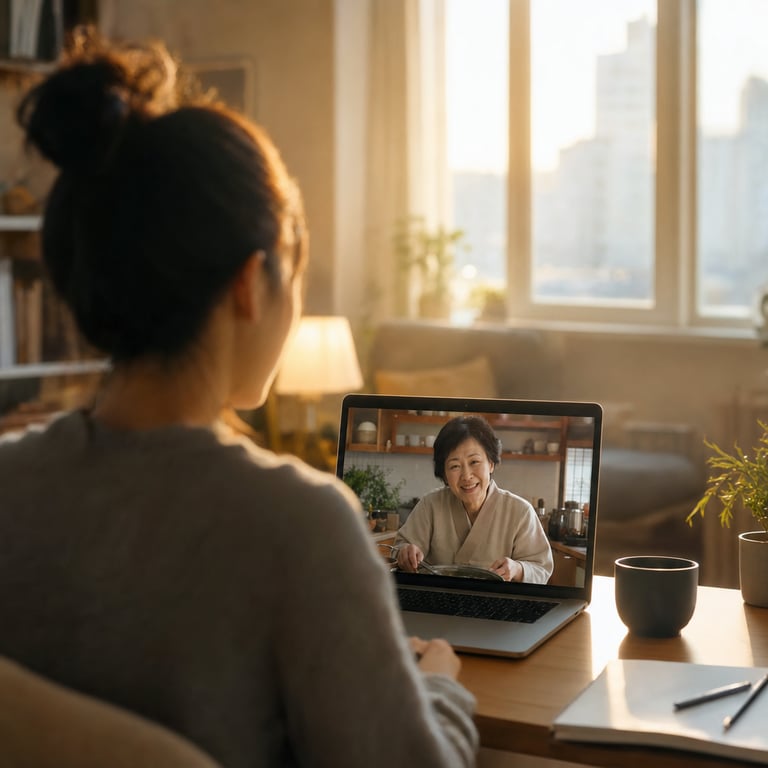
You know that feeling when you check the calendar and realize Chuseok is basically here — like, this week — and you're sitting in an apartment in LA or Toronto or wherever, and your mom is going to spend the holiday setting the table for charye without you at it.
That's where a lot of us are right now. Chuseok falls on September 25th this year, which means the three-day stretch — the 24th through the 26th — is already starting in Korea while it's still Wednesday morning where you are. If you haven't sent anything yet, you're not behind exactly, but you're in the window where "I'll figure it out later" stops being an option.
I've been the person scrambling two days out, texting my cousin in Busan "did you get anything yet, should I send something," and I've also been the person who planned ahead and felt smug about it for exactly one Chuseok before forgetting to do it again the next year. So this isn't a lecture. It's more like — here's what actually works when you're a diaspora Korean, or married into a Korean family, or just someone whose partner's parents live in Korea, and you're trying to make the holiday feel less like a gap and more like a bridge.
Why Chuseok Gifting Feels Different From Everything Else on the Calendar
If you grew up outside Korea, or you married into a Korean family without growing up in the culture, Chuseok can feel confusing in a specific way — it's not really like Thanksgiving even though everyone calls it that in English. Thanksgiving is a meal. Chuseok is a meal, a memorial rite for ancestors (charye), a trip back to the ancestral hometown for a lot of families, and a whole layer of gift-giving that runs on rules nobody explains out loud.
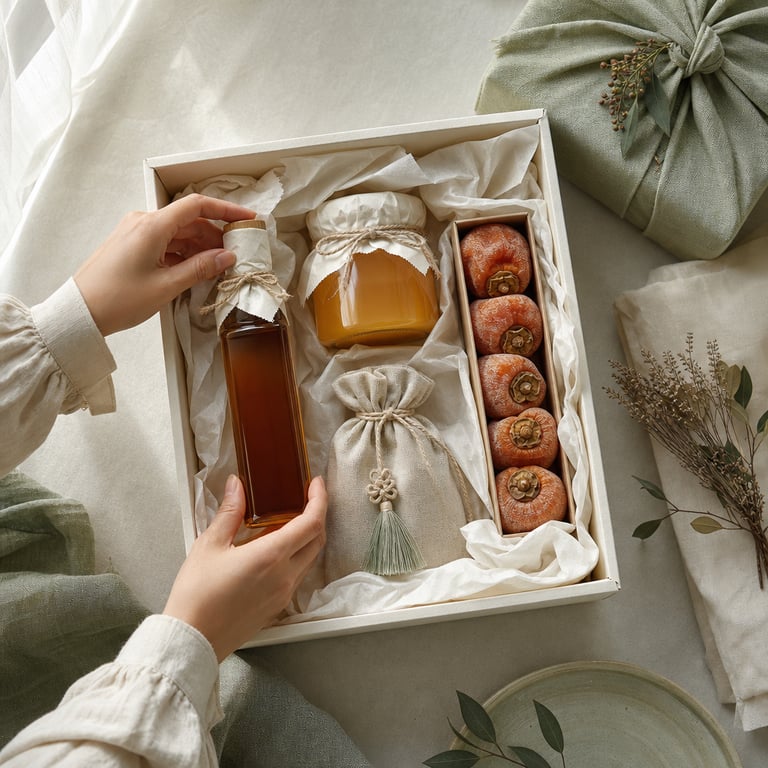
The core idea is that a Chuseok gift isn't a birthday present. It's closer to a gesture of respect — showing your parents, your in-laws, your grandparents that even from a distance, you're thinking about their comfort during the holiday prep. That's why the traditional gift categories in Korea skew toward things people will use during the holiday itself: songpyeon-making ingredients or the rice cakes themselves, hangwa (traditional cookies made from rice flour, honey, and nuts), boxed fruit — pears and apples especially, since they're the fruits placed on the memorial table — and premium items like beef sets or health foods such as red ginseng.
None of that travels well internationally. Fresh songpyeon can't survive a week in a shipping container. A box of Korean pears from a US retailer isn't the same pears, and honestly your mother-in-law will know the difference. This is the actual problem diaspora families run into every single year — the gifts that matter most in Korean gift-giving culture are the exact ones you cannot physically ship from abroad.
What Korean-American Families Actually Send Instead
So here's what I've noticed, both in my own family and in the group chats where people compare notes every September: most of us have quietly shifted toward sending value rather than objects. That means digital gift cards and mobile vouchers that let the person in Korea buy the songpyeon, the fruit set, the hangwa box themselves — from a store near them, at the freshness and quality they'd choose on their own.
This isn't a downgrade. If anything, it solves the actual etiquette problem better than shipping ever did. A well-chosen department store gift card, sent to your parents in Seoul, lets them walk into the food hall the day before Chuseok and pick out exactly the beef set or fruit basket they want for their own table — which is arguably more respectful than guessing on their behalf from six thousand miles away.
For younger relatives or cousins who aren't hosting a memorial table, the practical gifts work just as well — coffee credit, delivery app credit, a beauty or convenience store voucher. Chuseok in Korea also means three days where a lot of people are traveling or just resting, so something that makes the holiday itself easier — a meal delivered, a coffee run covered — lands better than you'd expect from something so small.
The Timing Problem Nobody Warns You About
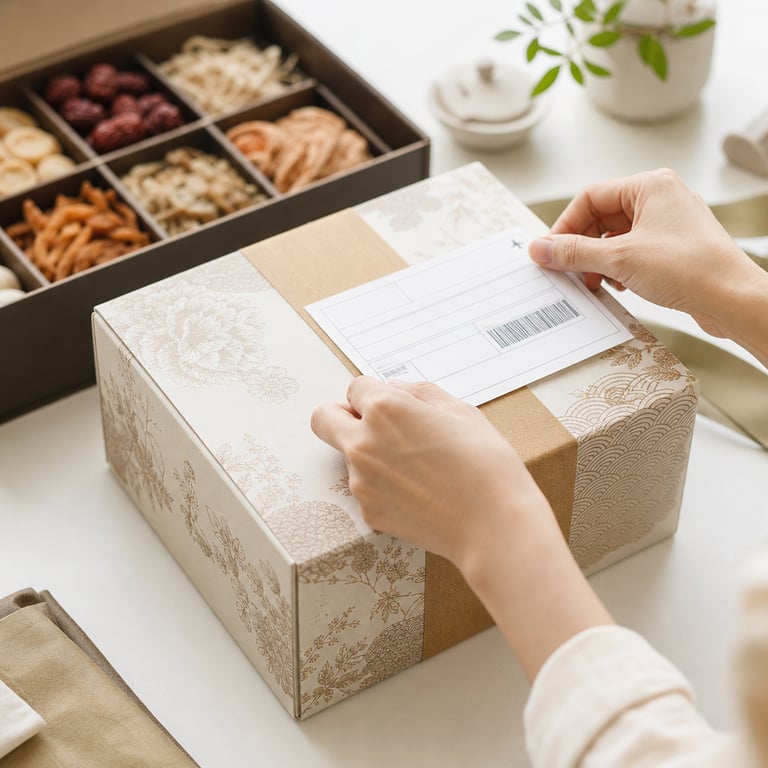
Here's the part that trips people up every year, including me: Korea doesn't stop for Chuseok, it slows to a crawl. Banks close. A lot of small businesses close for the full three days. Delivery services run on reduced schedules. If you're thinking about physical shipping at this point — two days out — it's essentially off the table; anything ordered now arrives after the holiday has already happened, which sort of defeats the purpose.
This is exactly why cross-border digital gifting has become the default fallback for people in our position. A gift card or mobile voucher sent today lands on your parents' phone today — no customs form, no carrier tracking a package that's stuck at an airport, no apology text explaining why it's late. If you're the kind of planner who likes gifts to arrive with room to spare, the honest truth is that "sent it same-day, arrived same-day" is not a compromise anymore. It's just how it works now.
One thing worth knowing if this is your first Chuseok navigating it solo (maybe you just got married into a Korean family, or your parents just moved back to Korea after years in the US): sending something the week before Chuseok, rather than on the day itself, tends to land better. It gives the recipient time to actually use it for holiday shopping instead of receiving a voucher after they've already bought everything themselves.
A Few Etiquette Notes for Anyone New to This
If you're not Korean but you're navigating Chuseok because of a partner, here are the things I wish someone had told me plainly instead of letting me guess:
Go for one meaningful gift rather than several small ones. A single well-chosen gift card reads as more thoughtful in Korean gift culture than a handful of little items — it's less about volume and more about the gesture being deliberate.
Don't skip your in-laws even if it feels like your partner "already handles that side." In Korean families, a gift to your spouse's parents during Chuseok is often read as a signal of how seriously you take the relationship, not just a nice-to-have.
Older relatives tend to appreciate anything tied to the traditional food categories — fruit, hangwa, beef, ginseng — even in gift-card form, because it still gestures at the holiday table itself. Younger relatives and cousins are usually fine with more modern, practical picks.
And a short note matters more than people expect. Even two sentences in English, or a rough attempt in Korean, changes how a gift lands. "Happy Chuseok, thinking of you and Grandma this year" does more work than the gift amount itself.
If You're Reading This on the 23rd or 24th
You still have time, but not much of it. The three-day window is genuinely the highest-traffic stretch of the year for anyone trying to reach family in Korea from abroad — flights are full, phone lines to relatives get busy, and if you're relying on anything physical, it's already too late for it to matter. Digital options are really the only category left that can still arrive before the holiday actually starts where your family is.
If it helps to have a starting point: cross-border gifting services built specifically for this — one example is SodaGift — exist precisely because so many of us hit this exact wall every September, standing in a different time zone from the people we most want to be sitting next to. You don't need to have it all figured out days in advance. You just need it to land before the table is set.
However you end up sending it — a fruit-set voucher, a coffee card, a note that says more than the gift itself — the point isn't really the item. It's that somewhere in Seoul or Busan or Daegu, your name comes up on a Sunday afternoon in September, and someone says, out loud, that you remembered. That's the whole thing Chuseok is actually asking of you. Everything else is logistics.
추석 잘 보내세요 — however far you are from the table this year.