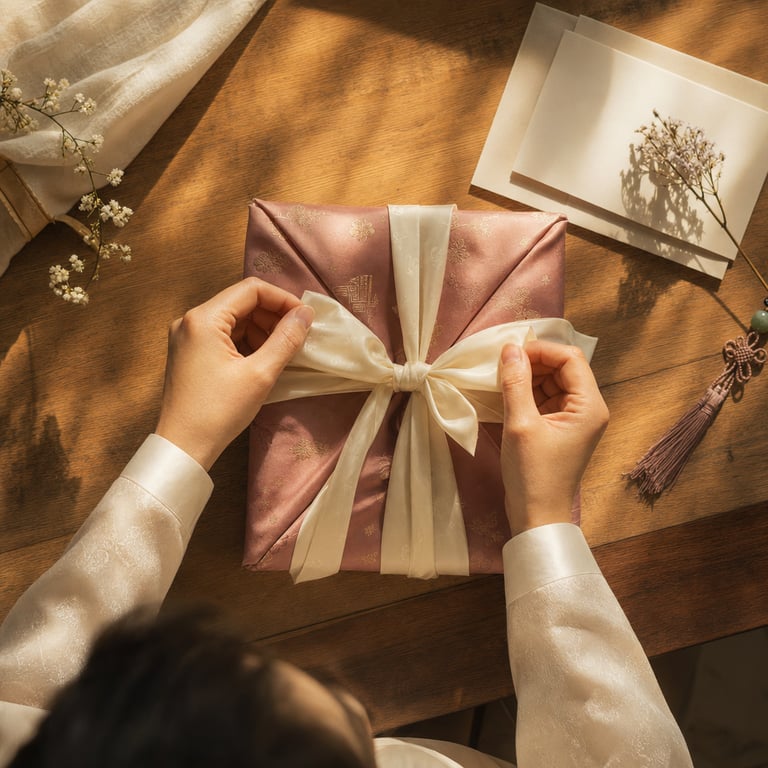
The Practical Guide to Sending a Chuseok Gift From Abroad When You Can't Fly Home
Published on September 14, 2026
Chuseok is eleven days out, and if you're reading this from LA, Toronto, or London, you already know the feeling: the group chat with your siblings back in Korea is starting to buzz about who's bringing what to the family table, and you're realizing — again — that you're not going to be at that table.
This happens every year. You call your parents, you say "I wish I could be there," and then you scramble to figure out what "showing up" even means when you're 6,000 miles away. Do you wire money and hope they buy something nice for themselves? Do you order a fruit basket online and pray it clears customs before the holiday? Do you just send a card?
The truth is, sending a gift overseas for Chuseok is less about finding the perfect item and more about picking the right method — because the method determines whether your gift actually arrives, on time, in a form your family can use. So instead of another list of gift ideas, let's walk through the actual mechanics: what works, what doesn't, and what to do if you're already cutting it close.
Why "Just Ship Something" Usually Backfires
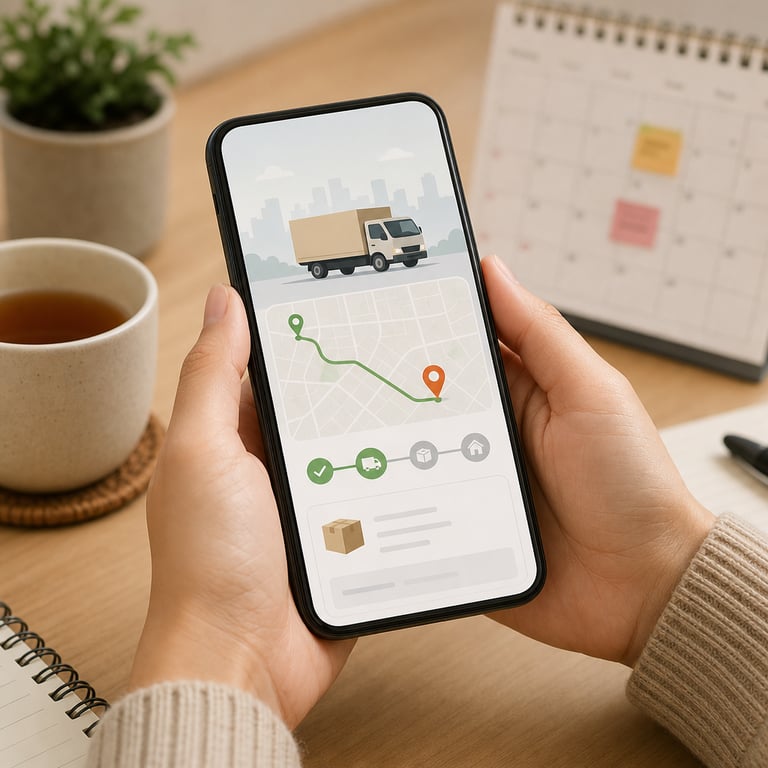
If you've tried international shipping for a Chuseok gift before, you probably already know the pain points. Korean customs during the Chuseok season gets slammed — traditional gift sets, health food, and produce boxes flood the system in the two weeks before the holiday, and delivery windows that normally say "3-5 business days" quietly become "10-14 business days." Add the fact that a lot of couriers pause deliveries during the actual holiday (September 24-26 this year), and you can end up with a box sitting in a warehouse in Incheon while your parents are already back from their hometown trip.
There's also the customs declaration issue that catches a lot of diaspora senders off guard. Korea has restrictions on what can be imported as a "gift" versus what triggers duty fees, and food items — which make up a huge share of traditional Chuseok gift sets like fruit, spam sets, and health supplements — are exactly the category that gets flagged most often. Nothing kills the warmth of a gift like your mom having to pay an unexpected customs fee to receive it.
None of this means shipping is a bad option. It just means it only works if you start early — realistically, three weeks before the holiday, not eleven days. If you're inside that window now, shipping a physical box is a gamble, not a plan.
The Wire Transfer Problem Nobody Talks About
The other default option is just sending money — a bank transfer, or increasingly, an app-to-app transfer if your family uses the same platform. It's fast, it's simple, and for a lot of people it feels like the safest bet.
But here's what actually happens on the receiving end more often than you'd think: the money lands in an account your parents don't check often, or it gets folded into the household budget instead of being spent on something for them. My cousin in Vancouver told me she wired her aunt in Daegu 200,000 won last Chuseok, fully intending it to be "go treat yourself" money — and found out months later her aunt had used it to pay a utility bill. Not wrong, exactly. Just not what either of them wanted it to become.
Money is impersonal in a specific way: it disappears into the general flow of a household's finances unless you attach real intention to it. If you're going to send cash, the trick is pairing it with a message specific enough that it can't be quietly repurposed — "this is for the two of you to get galbi at that place near the market" does more emotional work than a bank transfer memo line ever will.
Digital Gifting: The Middle Ground That Actually Fits the Timeline
This is where a lot of diaspora families have quietly shifted in the last few years, and it's worth understanding why. A digital gift — sent through a mobile gifting platform rather than shipped as a physical box — sidesteps both problems above. There's no customs process because nothing crosses a physical border. There's no delay because delivery is a notification, not a truck. And unlike cash, it arrives already converted into something specific: a department store voucher, a supermarket gift card, a coffee shop credit — something your family opens and immediately knows what it's for.
The practical advantage during Chuseok specifically is timing flexibility. You can send it the morning of, if you have to, and it still lands before dinner. You can also schedule it days in advance so it arrives exactly when your mom is doing her holiday grocery run, instead of getting buried in her inbox on a random Tuesday. One cross-border gift service, SodaGift, works this way for exactly this kind of situation — letting you send a Korean retailer or supermarket gift card that lands on someone's phone in Seoul within minutes of you sending it from wherever you are.
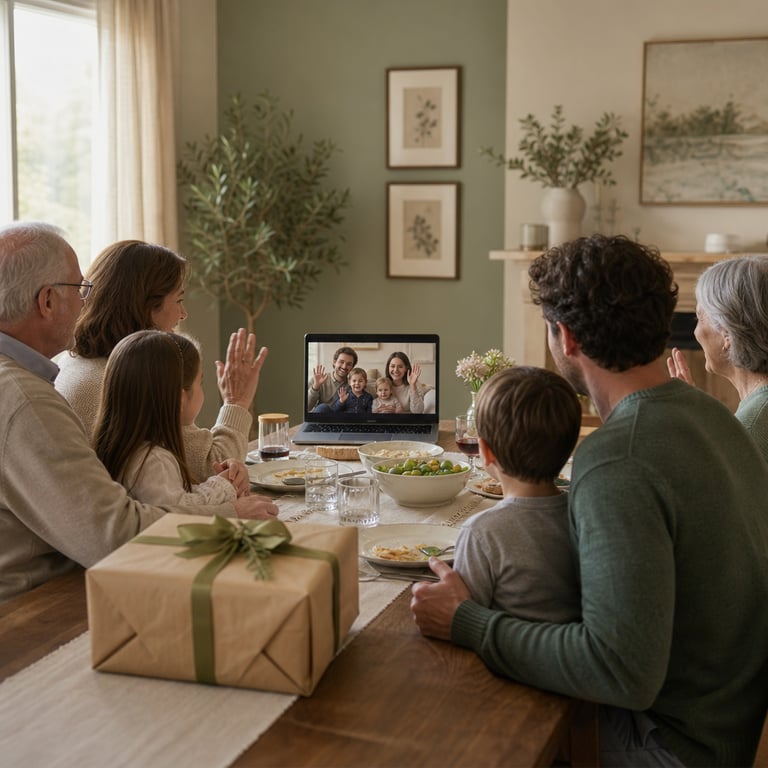
The honest tradeoff is that digital gifting can feel less "real" than a wrapped box under a tree — there's no unboxing moment, no physical object to hold. For some families that matters a lot. For others, especially aging parents who are perfectly comfortable with KakaoTalk but don't need one more thing cluttering the house, a gift card for the department store they already shop at is more useful than another fruit set they'll feel obligated to display.
What Korean Families Actually Expect During Chuseok
It helps to remember that Chuseok gift-giving isn't really about the object at all — it's about jeong, that sense of ongoing care and connection that Korean culture places a huge amount of weight on. The traditional gift sets (Spam, canned tuna, hanwoo beef, health supplements) exist because they're useful, shareable things a family can use during the holiday preparation and the ancestral rites (charye) that follow. The gift is functional first, sentimental second.
This is useful information if you're stuck deciding what to send. You don't need to replicate the exact traditional gift set from abroad — you need to give your family something they can use during the holiday window. A grocery voucher they can use to stock up before the family gathers. A department store gift card for the new autumn clothes everyone traditionally buys around this time (a practice called chuseok bim, dressed up in new clothes for the holiday). These digital equivalents honor the spirit of the tradition even if they don't look like the traditional boxed sets.
If You're Already Down to the Wire
Eleven days out is actually a decent runway if you go digital, tight but workable if you ship domestically within Korea (rather than internationally — some Korean retailers offer same-country delivery for gift sets, which is a good option if you have someone local who can coordinate), and genuinely risky if you're relying on international shipping from the US, Canada, UK, or Australia.
A realistic plan at this point looks like this: pick one thing your family will actually use — not the most impressive-looking gift, the most useful one — and send it in whatever form gets there reliably. Pair it with a video call or a voice message, not just a text, because the emotional weight of Chuseok comes from connection, and a gift without a moment of actual contact can feel transactional no matter how nice it is.
The Bigger Habit Worth Building
If this scramble feels familiar — if you're reading this in September 2026 having had the exact same "what do I send" conversation with yourself last year — it might be worth building a lighter version of this into a year-round habit instead of a once-a-year fire drill. Families who send small things regularly (a coffee gift here, a birthday voucher there) find that the big holiday gift stops carrying so much pressure, because it's not the only gesture all year. Chuseok becomes one more moment in an ongoing rhythm, instead of the single chance to prove you're still paying attention from far away.
Either way, the actual lesson from all of this is simple: match the method to the timeline you actually have, not the timeline you wish you had. Eleven days before Chuseok, that usually means digital over physical, specific over vague, and a phone call attached to whatever you send. Your parents aren't grading the gift. They're just checking whether you thought of them — and honestly, reading this far already means you did.