The Baskin Robbins 27 Cube: How to Send an Ice Cream Cake to Korea Without It Turning Into Soup
Published on August 27, 2026
Let's talk about the gift that sounds impossible until you actually do it: sending an ice cream cake across an ocean.
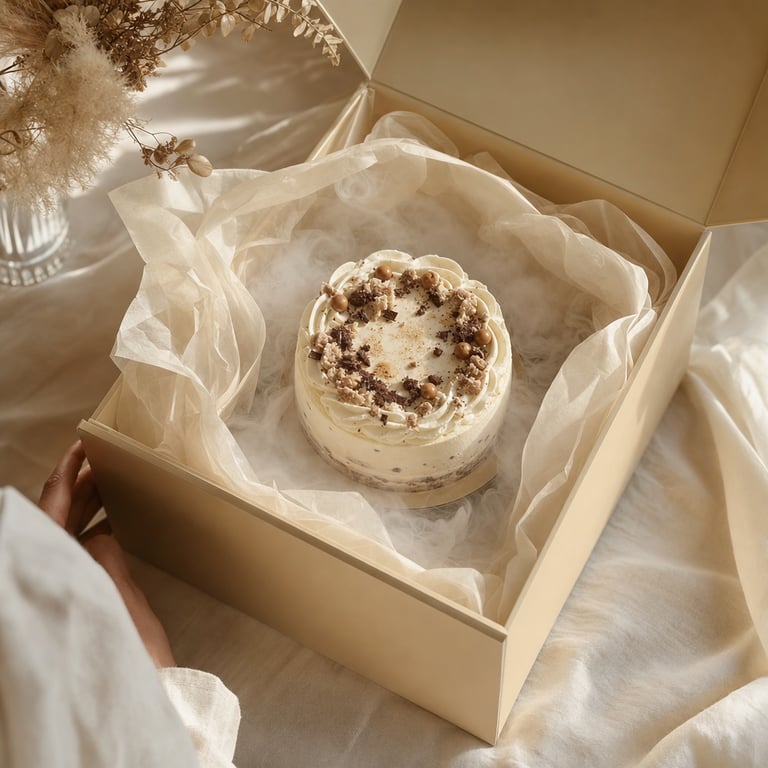
If you've spent any time on Korean Instagram or watched your cousin's KakaoTalk stories, you've seen it — the 27 Cube from Baskin Robbins Korea. It's not the same as the pint-sized ice cream cakes you'd grab at a US store. The 27 Cube is a small, dense, beautifully layered cake shaped like a building block, usually stacked two or three high with different flavors, and it's become the go-to gift for birthdays, graduations, "just because I miss you" moments, and every small Korean celebration in between. If you've been away from Korea for a few years, there's a good chance the 27 Cube wasn't even around when you left — it's a newer format that's exploded in popularity precisely because it photographs well and feels a little more special than a plain sheet cake.
Here's the problem. You can't ship it. You can't put it in a box with dry ice and expect it to survive customs, a layover, and a delivery truck sitting in the sun. Ice cream cake is maybe the single worst category of gift to try to send internationally through a courier, and yet it's exactly the kind of gift that makes someone's day in a way a gift card sometimes doesn't. So how do people abroad actually pull this off? It's less complicated than it sounds, but it does require rethinking what "sending" a gift even means.
Why "Shipping It Yourself" Was Never Actually an Option
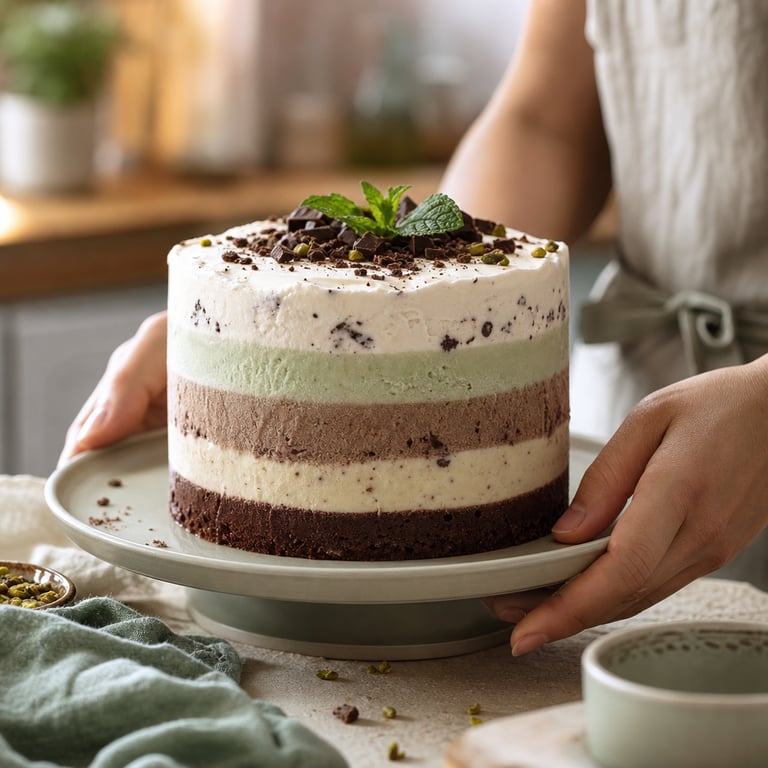
If your first instinct is "I'll just order it and have it shipped," it's worth walking through why that idea falls apart almost immediately. Frozen dessert logistics require temperature-controlled everything: insulated packaging, dry ice that's regulated as a hazardous material on most international carriers, and a delivery window measured in hours, not days. Korean domestic delivery services can pull this off within their own borders because the trip from bakery to doorstep might be 20 minutes. An international shipment from the US or Canada would need to survive customs inspection, potential delays, and a multi-day transit time. By the time it arrived — if it arrived — you'd be looking at a puddle in a box.
This is actually different from most of the gifts people successfully send home. A Starbucks e-gift card doesn't care about temperature. A CGV movie ticket doesn't melt. But a physical, perishable, temperature-sensitive cake needs to be made and delivered within the same city, ideally the same neighborhood, as the person eating it.
The Actual Trick: You're Not Sending the Cake, You're Sending the Order
Once you accept that the cake itself can't cross a border, the solution becomes obvious: you don't move the cake, you move the transaction. Baskin Robbins Korea, like most major Korean retailers, has an app-based ordering and delivery system built for exactly this — someone places an order, picks a store location or delivery address, and the cake goes from a Korean store to a Korean doorstep, all within Korea. The only missing piece is a way for someone outside Korea to trigger that order without a Korean phone number, a Korean bank card, or a Korean address of their own to enter as the billing address.
That's the actual gap that cross-border gifting services exist to fill. This is where something like SodaGift comes in as a factual example — it lets you select a Korean brand like Baskin Robbins, choose the cake or gift card option, and send it to a recipient's KakaoTalk, who then redeems it through the app or in-store using their own local information. You're never touching Korean payment infrastructure yourself. You're just picking what you want them to have and pointing it at the right person.
The result is that the cake gets made fresh, close to your recipient, on the day it's supposed to arrive — not three days after being packed in a warehouse somewhere.
What This Actually Looks Like in Practice
Say your mom's birthday is coming up and she's in Busan while you're in Los Angeles. You're not going to be there, and a video call birthday song only goes so far. What you can do is send a 27 Cube gift card or direct order timed to arrive that afternoon, so that when she opens KakaoTalk, there's a notification waiting — not a generic "happy birthday" text, but an actual cake she can walk into a nearby Baskin Robbins and pick up, or have delivered to her door depending on what the app supports in her area.
The emotional mechanics of this are worth naming directly, because they're different from a shipped gift. There's no waiting. There's no "did it arrive okay?" anxiety for five days. She opens it, and within the hour, she can be eating cake — the kind of immediacy that makes the gift feel present-tense instead of delayed. My cousin did this for her dad's birthday last year and said he texted a photo of the cake box within twenty minutes of her sending it. That's the whole appeal: compressed distance.
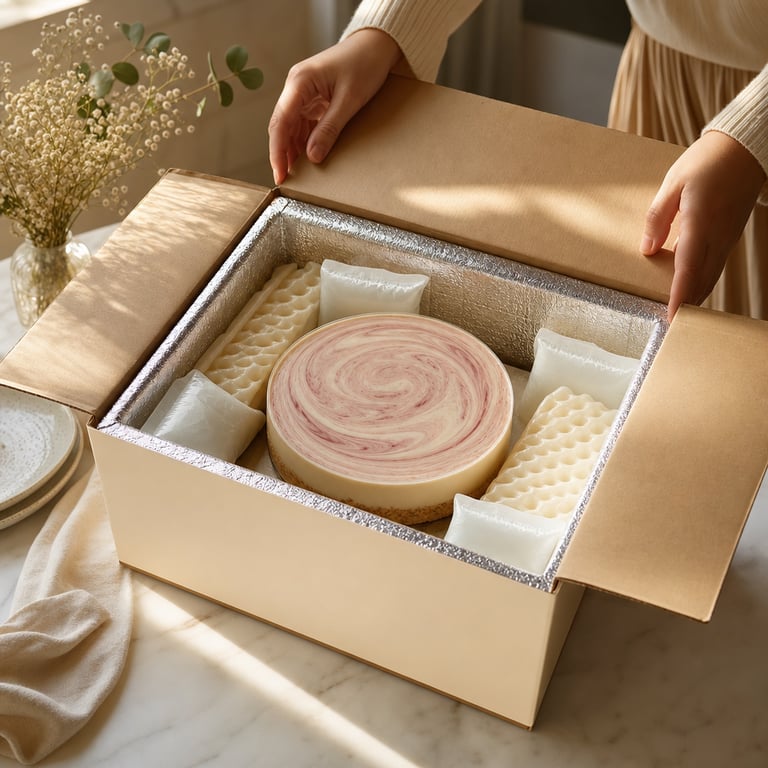
It also solves a very specific problem for Korean-American families where the person sending the gift genuinely doesn't know the cake culture well enough to order confidently in Korean, on a Korean app, using a Korean payment method they don't have. You're choosing from an interface built for you, in English, and the recipient still gets the authentic in-country product.
A Few Things Worth Knowing Before You Send One
Cake sizes and flavor combinations vary by store and by season in Korea, so if you have a strong preference (say, a specific flavor pairing your mom always orders), it's worth checking what's currently available rather than assuming last year's menu still applies. Some 27 Cube flavors are seasonal or regionally limited, similar to how US Baskin Robbins rotates its "flavor of the month."
Timing also matters more than you'd think. Because these are same-day, fresh-made items, you generally want to place the order with enough lead time that the store can prepare it — not five minutes before you want it delivered. If you're coordinating a surprise, sending it the morning of, rather than the night before, tends to work better for freshness and for making sure the recipient's plans that day don't conflict with pickup or delivery windows.
And it's worth choosing store pickup versus delivery deliberately. If your recipient lives somewhere with reliable last-mile delivery, having it dropped off feels more like a surprise. If they're the type to run errands anyway, sending them a pickup voucher for a store near their apartment or office can feel just as thoughtful, minus the risk of a delivery delay on a scorching August afternoon.
Beyond the Cake: The Bigger Shift This Represents
The 27 Cube is really just one example of a category of gift that used to be functionally impossible to send abroad — anything fresh, cold, or time-sensitive. Flowers, coffee, cake, fried chicken delivered hot to someone's door: these were always things you had to be physically present to give. What's changed is that Korean retail apps have built out delivery infrastructure so dense and fast that the last-mile problem is basically solved within the country. The only thing missing was a bridge for people outside Korea to use that infrastructure without needing a Korean identity to do it.
If you've been defaulting to gift cards or bank transfers because "real" gifts felt too complicated to send, it might be worth reconsidering what's actually possible now. A cake that arrives the same afternoon, fresh, timed to a specific moment — that's a different kind of gift than money in an account, and for something like a birthday, it can matter.
So next time you're staring at the calendar wondering what to do for someone back home, don't rule out the cake. It's more reachable than it used to be — you're just sending the order, not the ice cream.