Shopee or GrabGifts? How to Send Credit to Family in the Philippines from the US
Published on October 27, 2026
You're scrolling through your phone on a Sunday night, and your sister in Quezon City mentions that the family's internet router finally died. Or your mom says, in her usual understated way, that she's "just fine" while you can tell groceries have been tight. You want to help right now, not in six weeks by balikbayan box.
Cash transfers work, but they also put you in the position of deciding what the money is for, and some relatives would rather not talk about it. A gift that arrives already earmarked for something specific, like an online order, a few deliveries, or a ride to the clinic, can feel lighter for everyone.
That's where store and app credit comes in. As of October 2026, two of the most practical options for the Philippines are Shopee credit and GrabGifts. They solve different problems, and picking the right one matters more than the amount. This post walks through how each works, who it suits, and how to send one from the US without the shipping and customs headaches of a physical package.
What you're actually sending (and what you're not)
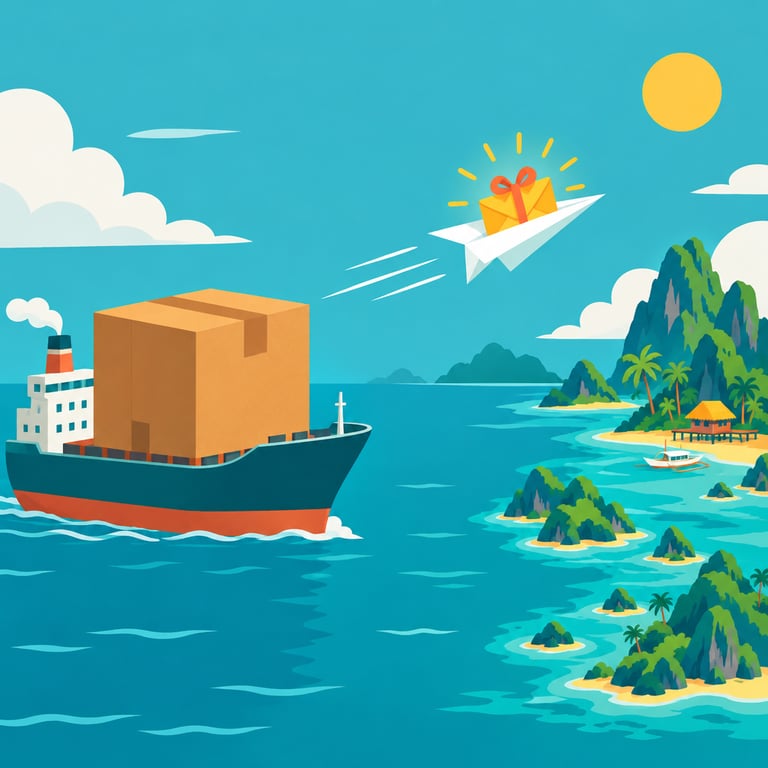
A digital gift card isn't money in your family's bank account, and it isn't a package. It's a code or a link, delivered by email, that your relative redeems inside an app they probably already have on their phone.
That has a few practical consequences:
- No shipping. Nothing travels, so there's no freight cost and nothing to get stuck at customs.
- No customs tax. Because there's no physical parcel, no one in the Philippines receives a duty notice or has to pay anything to claim it.
- It arrives in minutes, not weeks. Digital delivery is typically quick, so you can send something the same day a need comes up.
- It's spent where you intend. A Shopee card is spent on Shopee. A GrabGifts card is spent in the Grab app. That's a feature when you want the gift to go to groceries, supplies, or food rather than anything else.
The trade-off is flexibility. Cash can go anywhere, while a gift card goes where it's designed to go. So the real question is: what does your family actually spend money on?
Shopee credit: for the household shopper
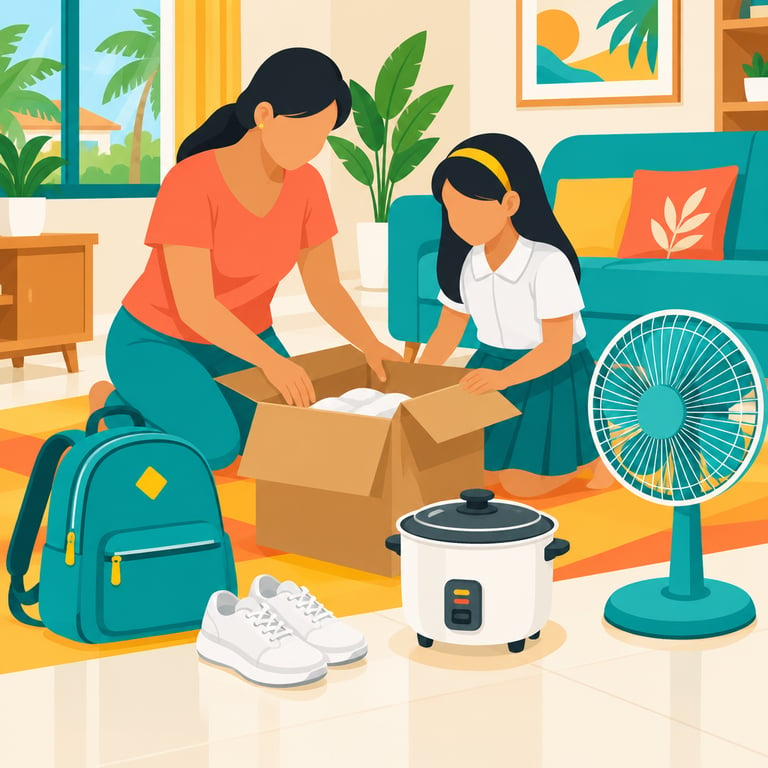
Shopee is one of the Philippines' biggest online marketplaces, and for many families it's the default place to buy everything from phone chargers to school uniforms to kitchen appliances. If your relative already orders from Shopee, a Shopee gift card is about as close to "useful and welcome" as a gift gets.
It works well when:
- Your family does a lot of online shopping and likes comparing prices.
- You want to cover a specific purchase: a school bag, a rice cooker, an electric fan, or a replacement phone.
- The recipient lives somewhere with limited shopping options. Online delivery can reach places that malls can't.
- You'd rather give someone the freedom to pick for themselves than guess at sizes or tastes.
Shopee's gift card is available at ₱1,000, which is a sensible single-purchase amount. It covers a decent school supply order, a few household basics, or a modest piece of electronics, and it's an easy number to explain to a relative: "Here's ₱1,000 on Shopee, buy yourself something you've been putting off."
One thing to keep in mind is that Shopee shopping takes a little patience. Orders ship and arrive on a delivery timeline, so it's less suited to "I need this tonight" situations. It's better for planned needs than emergencies.
Good use case: Your niece starts a new school term and needs shoes, a bag, and some supplies. A ₱1,000 Shopee card lets her mom order them on her own schedule, from the seller and price she chooses.
GrabGifts: for food, groceries, and getting around
GrabGifts is built around the Grab app, which in the Philippines covers food delivery (GrabFood), grocery delivery (GrabMart), and rides (GrabCar). It's the gift for the family that lives on convenience.
It works well when:
- Your parents are older and would rather not go out in the heat or the rain.
- A relative is recovering from illness or just had a baby, and the last thing they want to do is cook.
- You want to treat the family to dinner you can't share in person.
- Someone relies on ride-hailing for commuting or medical appointments.
GrabGifts comes in several amounts: ₱500, ₱1,000, and ₱3,000. In practice:
- ₱500 covers a solid family meal or two, or a smaller grocery top-up.
- ₱1,000 gives you a few deliveries, or a week of lighter grocery help.
- ₱3,000 works as a more substantial month-ahead gift, which suits a larger household or a time when the family needs real support.
A separate GrabFood ₱500 and ₱1,000 option also exists. The difference is scope. GrabFood is specifically for food orders, while GrabGifts spans the wider Grab ecosystem. If you know your family wants meals and nothing else, GrabFood is the more focused choice. If you'd like them to have room to cover groceries or a ride too, GrabGifts gives them more flexibility.
One honest caveat: Grab services depend on where your relative lives. Delivery and ride availability varies by area, so it's worth checking that Grab operates where they are before you send. Relatives in Metro Manila, Cebu, and Davao are generally well covered. Those in more remote provinces may find the options thinner.
So which one should you send?
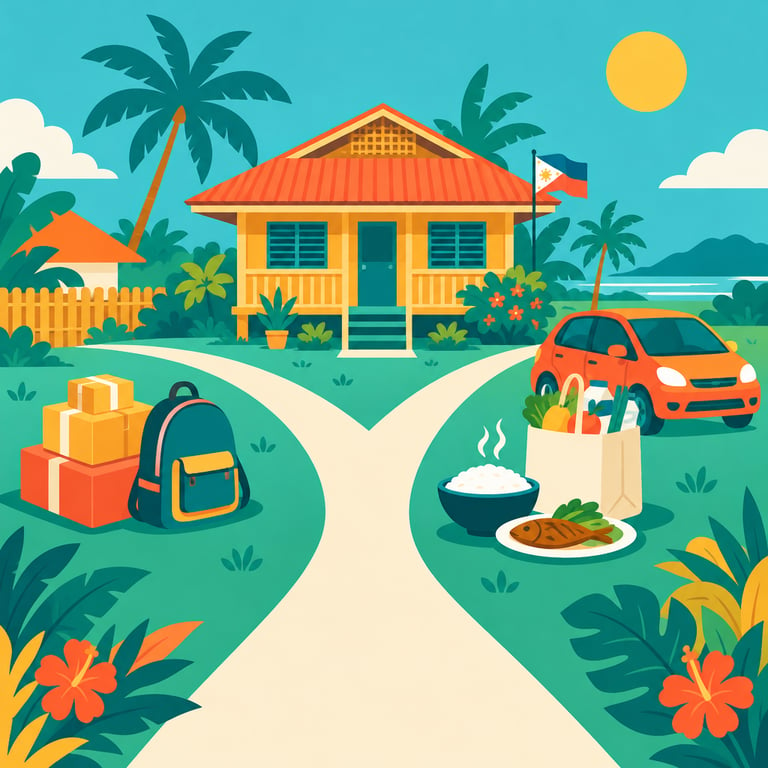
Rather than overthinking it, try a simple question: when your family needs help, what does it look like?
Choose Shopee if the need is "stuff." School things, household items, small appliances, gadgets. Anything that gets ordered and delivered over a few days.
Choose GrabGifts if the need is "today." Dinner, groceries, a ride, a day when nobody has energy to cook.
Consider both if you're sending to a household with different needs. Many people send a Shopee card to the sibling managing the house and a GrabGifts card to a parent who mostly needs meals.
Still unsure? Ask. A quick message like "Do you use Shopee or Grab more these days?" costs nothing, and the answer will tell you more than any guide can. Many families have a strong preference, and sending the one they already use means zero friction when they redeem it.
Picking an amount that feels right
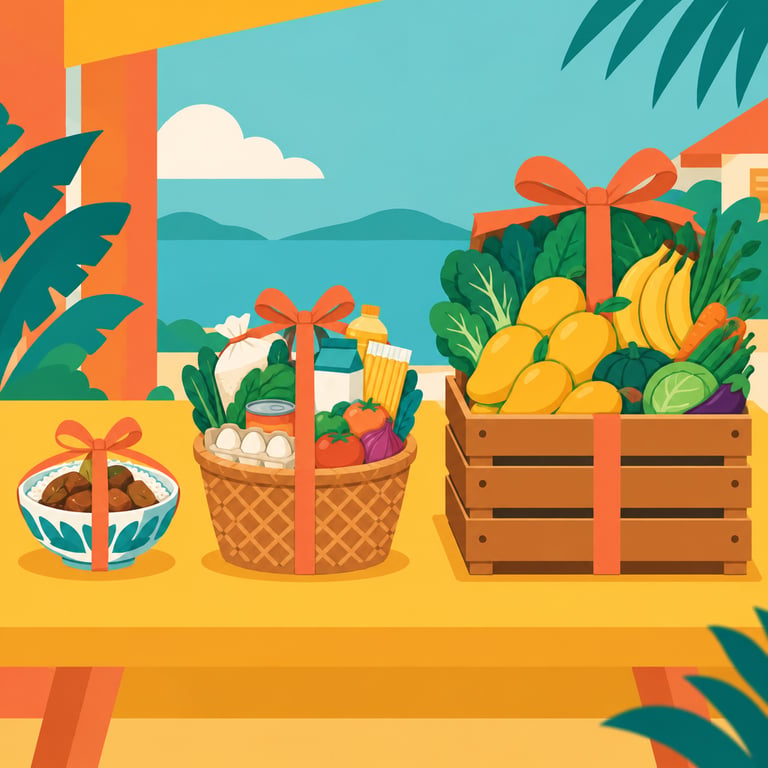
A few rules of thumb that tend to work:
- ₱500 is a "thinking of you" gift. It's perfect for a small treat or a single order, and it's an easy amount to send more than once, say monthly.
- ₱1,000 is the sweet spot for most occasions. It's meaningful without feeling like a burden to accept.
- ₱3,000 (GrabGifts) is for bigger support: a new baby, a relative who's been unwell, or covering a stretch when the family is stretched thin.
If you're sending to more than one household, smaller cards to several people often feel better than one big card to a single person, and they avoid the awkwardness of deciding who "gets" the gift.
Also remember it's still a ways before Christmas. Filipino families start their holiday season early, and the "Ber months" are already in full swing. If you plan to send something for the holidays, sending a smaller card now and another closer to December can spread the support out and give your family something to enjoy along the way.
How to send one from the US, step by step
The process is simple, and it doesn't require your family to do anything complicated. One cross-border gift service you can use is SodaGift, and the flow looks like this with most digital gift services:
- Choose Philippines as the destination and pick your brand: Shopee, GrabGifts, or GrabFood.
- Select the amount. The face value is in pesos (₱500, ₱1,000, ₱3,000), and your checkout shows a dollar price.
- Add the recipient's details and a short message. A personal note is worth the extra thirty seconds. Something like "Pang-grocery mo ito, Nay. Love you" goes a long way.
- Pay in US dollars by card or PayPal, just like any other online purchase.
- The gift is delivered digitally, as a link or code that the recipient can open on their phone.
The whole thing takes a few minutes. There's no shipping charge and no customs fee on the receiving end, so the amount you choose is the amount they get.
A few tips so the gift actually gets used
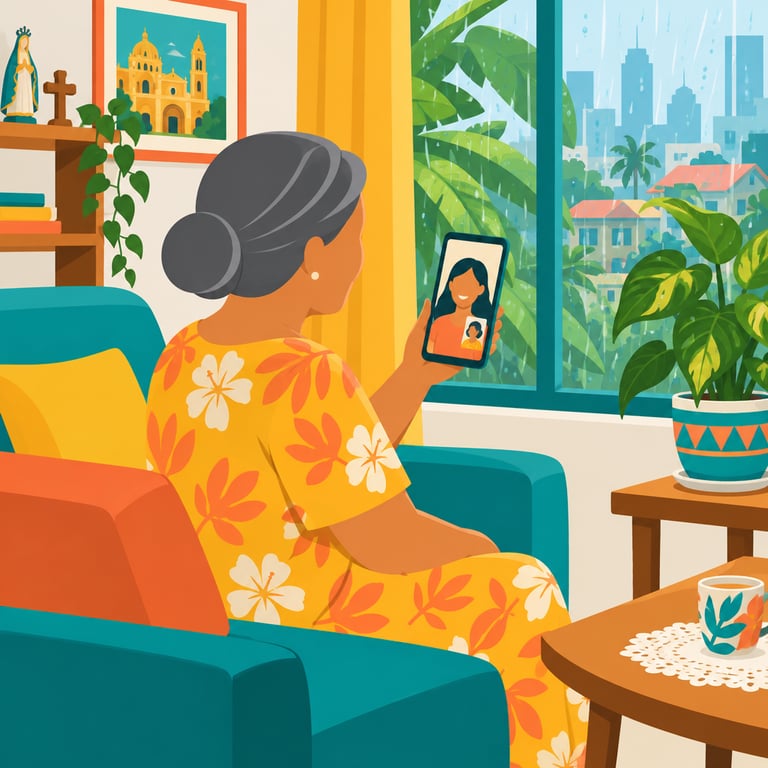
A gift card that sits unredeemed isn't much of a gift. A little preparation helps:
Give them a heads-up. Send a quick message before or right after, so the email doesn't get lost among spam or promotional messages. "Check your email, I sent you something" is enough.
Make sure they have the app. Shopee and Grab both need to be installed and logged in. If your relative doesn't have an account yet, setting one up ahead of time (or walking them through it on a video call) is easier than troubleshooting on redemption day.
Walk them through redemption once. For Grab, the typical flow is to open the app, save the gift card to the rewards section, then choose the service and apply it at checkout. For Shopee, follow the redemption instructions on the gift card page. A two-minute video call the first time makes every future gift easier, and it turns into a nice moment of connection too.
Screenshot the code. Save a copy of the gift card details, in case the email gets buried or connectivity is spotty.
Check the service area for Grab. If you're not sure whether GrabFood or GrabMart operates where your relative lives, a quick look at Grab's coverage page will save a disappointing surprise.
A small gift that says "I'm paying attention"
The best cross-border gifts aren't the biggest. They're the ones that show you noticed something specific: that the router died, that Mom has been skipping meals when she's tired, that your nephew is starting a new school year.
Shopee credit and GrabGifts are two simple ways to turn that attention into something useful, fast, and without the cost and delay of shipping a box. Pick the one that matches how your family actually lives, add a message that sounds like you, and send it while the thought is still fresh.
If you're not sure which to choose, start with a single ₱500 or ₱1,000 card and ask how it went. Their answer will tell you exactly what to send next time.