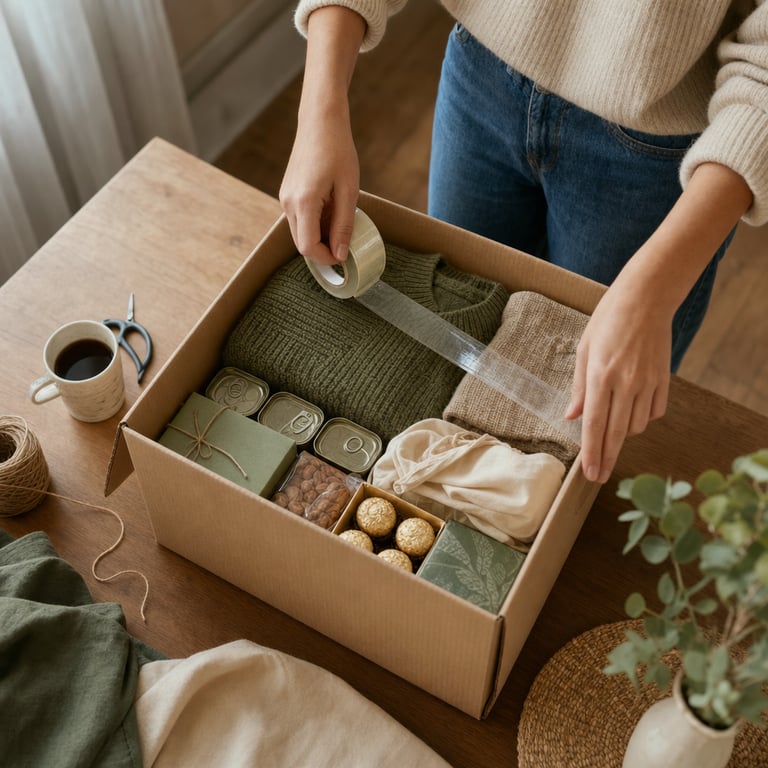
Sending a Care Package to the Philippines? Here's What Actually Works in 2026
Published on July 29, 2026
You've done the math before. A box of Spam, canned goods, chocolates, a couple of t-shirts, and maybe a phone case for your nephew — pack it all up, tape the box, drive it to the shipping counter, and watch the total climb past $150 before the cashier even finishes scanning the customs form. Then you wait. Four weeks if you're lucky, eight if the box gets held up in Manila customs for "inspection," which is really just a polite way of saying it's sitting in a warehouse somewhere while your lola wonders if you forgot her birthday.
If you're a Filipino living in the US — whether you came over on a work visa fifteen years ago or you're a second-generation kid trying to stay connected to family you've only met a handful of times — you know this cycle. The balikbayan box is practically a cultural institution. It's also, increasingly, not the only option, and for a lot of situations, not even the best one.
This isn't a "throw out the box" post. Balikbayan boxes still matter — there's something about a physical package from Stateside that a gift card can't replicate. But if you're trying to figure out the right way to send something home this month, not for Christmas, here's an honest breakdown of what each method is actually good for.
The Balikbayan Box Still Has Its Place — Just Not for Everything
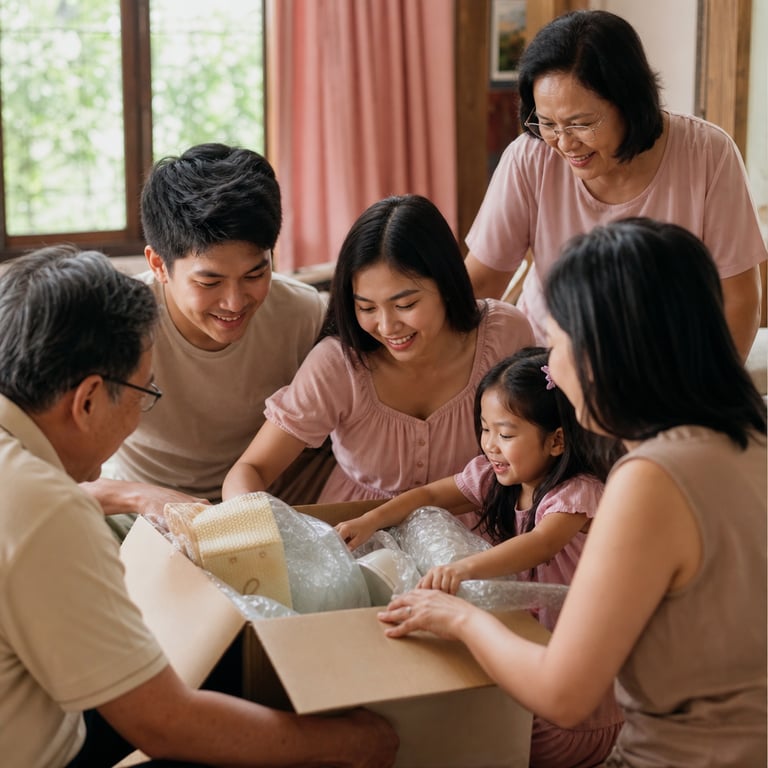
Balikbayan boxes make sense when you're sending things that are genuinely hard to get in the Philippines, or when the volume matters more than the speed. Filling a box with US-brand vitamins, name-brand shoes in sizes that are hard to find locally, or a stack of pasalubong for a dozen relatives — that's what the box was built for.
What it's not built for is urgency. If your mom's birthday is in nine days, a box shipped today with standard door-to-door service isn't making it. Air freight can get there faster, but you'll pay closer to $10-12 per kilo instead of the $3-4 you'd pay for sea freight, and suddenly your $40 worth of snacks costs $180 to send.
There's also the sorting problem nobody talks about enough: you're guessing. You're guessing what size shirt your cousin wears now, whether your uncle still likes that brand of coffee, whether the phone case will even fit his new phone. A box is generous, but it's also a gamble.
What Digital Gifting Actually Solves (and What It Doesn't)
This is where a lot of Filipino families abroad have quietly shifted their habits over the past few years — not away from the box entirely, but toward pairing it with something that arrives the same day you send it.
E-wallet top-ups, grocery and retail gift credits, and food delivery gift cards have become the practical middle ground. If your tita needs help with this month's electric bill, a wallet top-up gets there in minutes and she decides how to use it — no guessing, no customs delay, no shipping fee eating into the gift itself. If it's your kuya's anniversary and you want the family to have a nice dinner without you being there, a restaurant gift card does exactly that, the same evening.
What this doesn't solve is the sentimental weight of a physical object. Nobody unwraps a wallet top-up and gets emotional the way they might over a box of things that smell like America — the specific brand of shampoo, the snacks that aren't sold locally, a hoodie with a US city name on it. Digital gifts are fast and flexible. Boxes are tactile and personal. Most families I know end up using both, just for different occasions.
One service built specifically for this kind of cross-border sending is SodaGift, which lets you send digital gifts to the Philippines without routing everything through a courier — useful for the "I need this to land today" situations that a balikbayan box simply can't cover.
Timing Matters More Than You Think
Here's something that trips up a lot of first-time senders: shipping times to the Philippines aren't consistent year-round. Ber-months — September through December — are famously the busiest shipping window in the Philippines, and courier volume spikes hard. If you're planning to send a box for Christmas, the window to do it without air-freight prices starts closing around mid-October, not December.
Outside that stretch, things move a little more predictably, but "predictable" for international freight still means measuring in weeks, not days. If you know a birthday, a graduation, or a family gathering is coming up, the safest rule of thumb is: physical box, plan six to eight weeks ahead; digital gift, plan same-day.

This matters for reasons beyond convenience, too. Back-to-school season in the Philippines runs earlier in the year than in the US, but if you've got nieces or nephews studying abroad — a growing number of Filipino families now have kids on both sides of the ocean — August tends to be the month everyone's scrambling to get supplies, tuition help, or just a little extra cash to a student before the term starts. It's worth keeping on your radar even if it's not the occasion driving this particular care package.
The Customs and Cost Details Nobody Explains Clearly
If you've sent a box before, you've probably run into the informal import limit — packages under a certain declared value tend to clear without duties, but go over it (especially with electronics or anything that looks resellable) and you might be looking at a duties bill your relative has to pay on pickup. That's the quiet cruelty of a lot of care packages: the sender pays for shipping, and the recipient ends up paying a surprise fee just to receive the gift.
This is one of the underrated advantages of digital gifting for anything transactional — no customs, no duties, no surprise fee at pickup. The amount you send is the amount that arrives. For big-ticket physical gifts, it's worth declaring accurately and, if you're sending electronics, checking current thresholds before you ship, because the rules shift periodically and what worked two years ago might trigger a duty now.
Mixing Methods Is Usually the Smartest Approach
The families who seem to have this figured out aren't choosing one method and sticking to it forever — they're matching the method to the moment. A balikbayan box goes out twice a year, timed around the ber-months and maybe a summer visit home. In between, smaller digital gifts cover the birthdays, the "just checking in" gestures, the emergency top-ups when a typhoon knocks out power for a week and your family needs to reload prepaid data or buy supplies before the store lines get long.
If you're new to sending things home and trying to figure out where to start, a decent rule: use the box for things that are genuinely better as physical objects — clothing, specialty food, gifts for kids who like unwrapping something — and use digital options for anything time-sensitive, anything transactional, or anything where you're not sure exactly what they need right now.
It also helps to actually ask. A lot of senders default to the box because it feels more substantial, more like "a real gift," when what their family actually needs that month is help with a bill or a full pantry, not another t-shirt. A five-minute video call asking "what do you actually need this month" will save you money and guesswork every time.
Starting Small Doesn't Mean Starting Wrong
If this is your first time trying to send something home and the whole system feels overwhelming — the courier pricing, the customs rules, the shipping calendar — you don't have to solve everything at once. Send one digital gift for the next birthday or milestone, see how it lands, and build from there. Pair it with a box around the holidays if that's still important to your family's traditions. There's no rule that says you have to pick a lane and stay in it.
What matters more than the method is the consistency — the fact that your family in Manila, Cebu, or Davao hears from you regularly, not just once a year in a cardboard box. However you get there, that's the part that actually lands.