
Obon 2026: Loving a Family You Can't Fly Home To
Published on August 13, 2026
Right now, somewhere in Japan, someone is buying a train ticket that cost three times what it should, because it's the only bullet train seat left that gets them home before the 13th. Offices across Tokyo and Osaka are quietly clearing their calendars. Convenience stores are stocking up on paper lanterns. And in living rooms from Los Angeles to London, people who love someone in Japan are checking the time difference for the fifth time today, doing the math on when it's actually okay to call.
Obon runs August 13 through 16 this year, and if you didn't grow up with it, it's easy to underestimate. It's not a national holiday — there's no law that shuts the country down. But almost every company observes it anyway, which means it functions like one of the biggest travel weeks in Japan, arguably bigger than New Year's for some families. Add in Mountain Day landing on August 11, and this year the whole thing stretches into something close to a full week where half the country is either on a train, in a car, or standing at a family grave with incense in hand.
If your partner, your in-laws, your closest friend from grad school, or your own extended family lives through this every year while you watch from a different continent, you already know the particular kind of ache this week brings. It's not sadness, exactly. It's more like standing outside a warm room, watching through the window, wanting badly to be let in.
What Obon Actually Asks of People

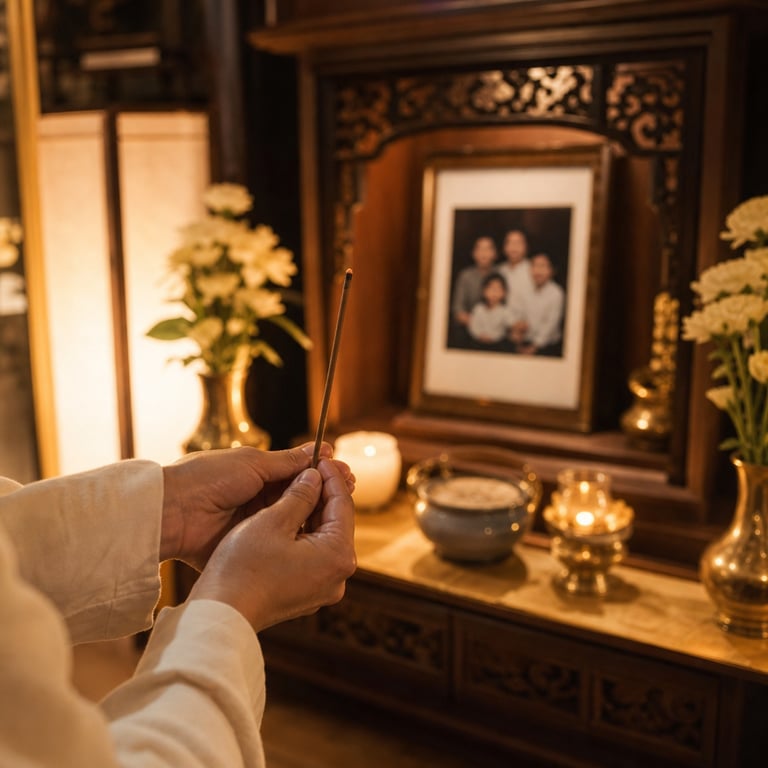
Obon is built around a simple, old belief: that ancestors' spirits return home for a few days each August, and the living should be there to welcome them. Families travel to their hometowns — often small towns far from where they now live and work — to clean and visit graves, light lanterns to guide spirits back, and eat meals together that have been made the same way for generations. In some regions, the week closes with lanterns floated down rivers or out to sea, a quiet, almost cinematic goodbye until next year.
It's a homecoming built on obligation and love in equal measure. And it means that for four or five days, a huge portion of Japan is simply unreachable in the way you're used to. Trains are booked out weeks in advance. Phones are set to silent during grave visits. The rhythm of the week is slower, more inward, more about presence than communication.
For someone abroad, this creates a strange kind of loneliness — not because your family or partner forgot about you, but because they're fully, deeply somewhere else. Somewhere you can't easily follow.
The Long Weekend Nobody Warns You About
Here's something that surprises a lot of people outside Japan: Obon isn't legally a holiday, yet it behaves like one of the country's biggest. Because Mountain Day falls on August 11 this year — an actual public holiday — many companies stretch their Obon closures to bridge the gap, turning it into a run of five or six days off. Trains sell out earlier than usual. Hotels near ancestral hometowns fill months in advance. Highways clog with cars carrying grandparents, coolers, and gifts for the in-laws.
If you're used to reaching your person on WhatsApp within the hour, this week might feel like radio silence — not because anything is wrong, but because they're three trains deep into a trip that started before dawn. Knowing this ahead of time changes how you experience the quiet. It stops feeling like distance and starts feeling like patience.
What "Staying Connected" Actually Looks Like This Week
I've talked to a few people over the years who've built their own quiet rituals around this exact week, and none of them involve grand gestures. They're smaller than that, and somehow more effective.
One friend in Seattle, married to someone from a small town outside Nagoya, always sends a single message the morning her husband's family visits the grave — not to intrude, just so he knows she's thinking of the day even though she's never once been able to make the trip herself. She doesn't expect a reply until evening, and she's stopped waiting for one.
Another person I know schedules a video call for after the family dinner, not during it — she learned the hard way that trying to squeeze into a table already full of aunts, cousins, and a grandmother who doesn't quite understand video calls just adds stress to everyone's night. The after-dinner call, when things have settled, works so much better.
The common thread is timing, not effort. Obon isn't a week to compete for attention. It's a week to fit yourself gently into someone else's rhythm instead of asking them to adjust to yours.
The Time Zone Math Nobody Tells You to Do
If you're on the US West Coast, Japan is roughly 16 hours ahead — which means their evening, when the whole extended family is finally sitting down together, lands somewhere around 2 to 4 AM your time. It's brutal, and it's exactly why so many people abroad end up sending a message the night before, timed to arrive as their family wakes up on the 13th, rather than trying to catch anyone live during the trip itself.
East Coast senders have it slightly easier — a 13-hour gap means a message sent before bed lands mid-morning in Japan, right around when families are usually finishing breakfast and getting ready to head to the cemetery. It's not a perfect window, but it's a workable one.
The people who feel most connected during weeks like this aren't the ones who call the most. They're the ones who figure out the one moment in the day that actually works — and show up for that moment, consistently, instead of trying to be everywhere at once.
When You Can't Be There, Being Thought Of Still Counts
There's a particular guilt that comes with loving someone who's going through something meaningful without you — a wedding you couldn't fly to, a grandmother's funeral you found out about a day late, a family trip you've heard about every August for years but never once joined. Obon can carry some of that same weight, especially for partners who married into a family with traditions they're still learning, or adult children who left Japan years ago and now watch the week unfold through photos their siblings send.
What actually helps, from what I've seen, isn't trying to make up for the distance with something big. It's smaller and steadier than that — a message that shows you know what week it is, a small gift sent ahead of time so it's waiting when they land back home exhausted from the trip, a call scheduled for the right hour instead of the convenient one.
If you've ever tried to send a gift overseas the traditional way — shipping a package internationally and praying it clears customs before the occasion passes — you already know why physical gifts rarely work for a week like this. Cross-border gifting has gotten a lot easier in the last few years, though. Digital gift cards and instant transfers mean you don't need weeks of shipping lead time to make a gesture land on time. One cross-border gift service, SodaGift, exists precisely for weeks like this one, when a physical package would never arrive in time but the thought still needs to. For anyone weighing how to send a gift card internationally versus mailing something that might sit in customs, digital ends up being the only option that actually respects the timeline Obon runs on.
The gesture matters less than the timing. A small thing that lands exactly when someone needs it beats a bigger thing that arrives after the moment has passed.
A Week Worth Planning Around, Not Just Reacting To
If this is a week that comes around every year for your family — and for a lot of people reading this, it does — it's worth building a small routine around it instead of scrambling each August. Note the dates now, even loosely. Figure out which hour actually works for a call, once, and reuse that same window every year instead of renegotiating it every time. Ask, if you haven't yet, what the trip actually looks like for them — which town, which grandparent's house, how many trains — so that when they mention it in passing next year, you already understand the shape of their week.
Obon isn't a holiday you can participate in from afar in any complete sense. But it's not a wall, either. It's a week that asks for patience, a little bit of planning, and the willingness to love someone well even when you can only do it through a screen, on their time, in their rhythm.
If your family's homecoming is happening right now, somewhere in Japan, without you — you're not as far away from it as it feels. You just have to find the right hour to show up.