
Long-Distance Love in August 2026: What Couples Gift
Published on August 10, 2026
It's 11 p.m. in Toronto and 12 p.m. the next day in Seoul when you finally get a free hour to talk to your partner. You've been dating for eight months — six of them long-distance, ever since his visa cleared and hers didn't. You want to send something. Not a big gesture, just something that says I thought of you today. You open your shopping app, add a candle to the cart, check the shipping estimate, and close the tab. Twelve to eighteen business days. By the time it arrives, the moment you wanted to mark will be old news.
If you're in a relationship split across a border — one of you in LA, Vancouver, London, or Manila, and the other back in Korea or the Philippines — August has a particular kind of loneliness to it. Summer plans got made assuming a visit that fell through. The group chats are full of friends posting beach trips together. And you're doing the math on flight costs again, quietly, for the third time this month.
This isn't a post about grand romantic gestures. It's about the smaller, more sustainable question a lot of expat couples eventually land on: how do you actually keep showing up for each other when you can't be in the same room, without turning every gift into a two-week shipping saga?
The physical gift problem nobody warns you about
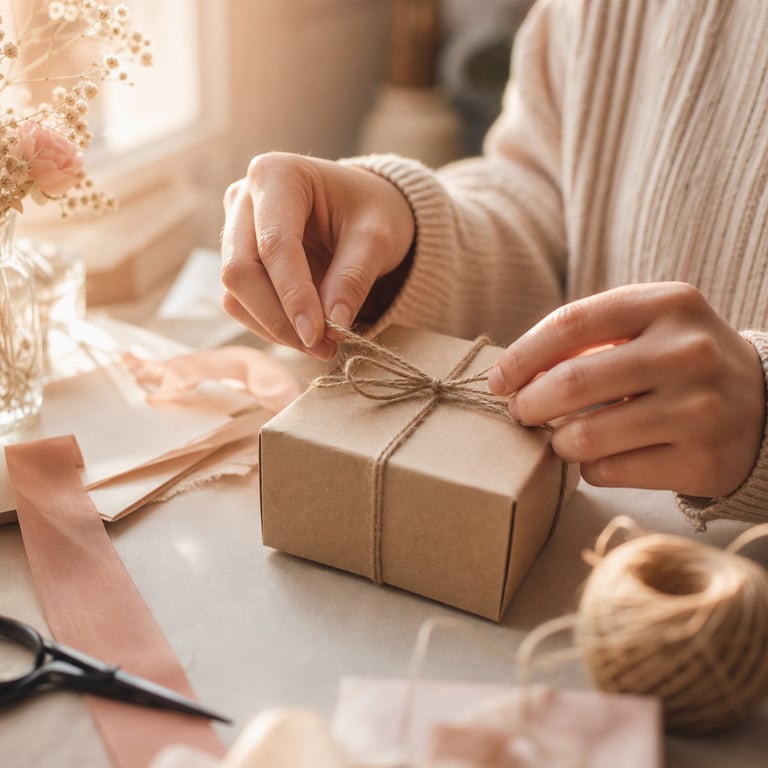
When you first start dating long-distance, physical gifts feel like the obvious answer. A care package feels more "real" than a digital anything. But three or four rounds in, the cracks show. Customs fees eat into the thoughtfulness. Something breaks in transit. Or — this one stings the most — it just sits in a delivery locker for a week because your partner works nights and can't get to the post office before it closes.
There's also a quieter cost: the planning tax. A physical gift means choosing something two to three weeks before you actually want it to arrive, which means it's disconnected from the moment. You can't send a "you sounded exhausted on our call last night" gift. You can only send a "I'm hoping this arrives roughly around your birthday" gift. For couples trying to stay emotionally present across a 13-to-16-hour time difference, that lag matters more than people expect.
This is part of why so many couples who've been doing long-distance for a while quietly shift most of their gifting to digital-first categories — not because it's trendy, but because it's the only thing that keeps pace with how the relationship actually moves day to day.
What "send gift overseas" actually means now
If you search "send gift card internationally," you'll notice most results assume you're sending something once, for one occasion. But for couples, gifting isn't an event — it's closer to a habit, like texting good morning. The bar for a cross-border gift isn't "impressive." It's "arrives in the next ten minutes, in a form they can actually use where they live."
That rules out a lot of the classic gift-card advice you'll find online, which is often US-brand-specific and doesn't translate once your partner is in Seoul or Cebu. A gift card from a chain that doesn't exist in their country isn't a gift, it's a puzzle. The categories that actually hold up across borders tend to be simpler than people assume:
Coffee and café vouchers. Nearly every city has a café culture, and a voucher usable at local chains means your partner can use it that same afternoon — no waiting for a US-only brand to open a branch nearby.
Food delivery credit. This one lands harder than it sounds. Sending a food delivery gift card on a night your partner mentioned being swamped at work isn't romantic in the traditional sense, but it's the kind of gift that actually gets used, same day, and gets a real reaction — "wait, you just did that?"
K-beauty or general beauty gift cards, for partners who like to treat themselves but feel weird spending on it solo.
General retail or lifestyle gift cards that work locally, so the person on the receiving end has actual choice rather than a narrow, foreign-brand option.

The common thread isn't the category — it's that all of these can be sent and opened within minutes, on a phone, in the recipient's own app ecosystem. That's the actual definition of "worked" for a long-distance gift in 2026: it showed up while the feeling was still fresh.
Building a rhythm instead of chasing big dates
Couples who make long-distance work for years — not months — tend to stop treating gifting as something reserved for anniversaries and birthdays. They build smaller rhythms instead. A monthly "just because" gift. A gift sent the day after a hard exam or a rough shift at work. A tiny thing sent right when a call ends badly, before either person has time to stew on it.
This works for a practical reason: it lowers the stakes on any single gift. If every gift has to be The Big One, the pressure builds and the frequency drops. If gifts are allowed to be small and frequent — a $10 coffee voucher on a Tuesday — the relationship gets more small moments of "you're thinking about me," which, for LDR couples, is often the thing that's actually missing day to day. Distance doesn't remove affection. It removes the incidental, physical proof of it — the hand on the shoulder, the coffee bought without asking. Small digital gifts, sent often, are one of the more effective substitutes people have found for that missing physical presence.
The accessibility question that trips people up
Here's something that catches a lot of first-time long-distance senders off guard: not every gifting platform works the same way in every country. A gift card that's easy for you to buy in the US might be difficult or impossible for your partner to redeem in Korea, and vice versa. Payment methods differ. App ecosystems differ. What counts as a "normal" way to receive a gift in Manila (through GCash, for instance) looks nothing like what's normal in Seoul (through KakaoTalk).
This is the part that actually matters more than the gift itself: does your partner have to jump through hoops to use it? Does it require a bank account they don't have, or an app they'd need to download just for this one gift? A gift that requires effort to redeem stops feeling like a gift and starts feeling like a small chore you handed them. The platforms worth using for cross-border gifting are the ones built specifically to route around this — matching the gift to whatever's actually normal in the recipient's country, rather than assuming your country's defaults apply everywhere. One cross-border gift service built around exactly this problem is SodaGift, which lets you pay in US dollars from wherever you are while your partner receives and redeems it in whatever format is actually normal on their end — pesos through GCash, won through a Korean gift card, and so on.
What to actually do this week
If you're the one reading this at midnight, doing the time-zone math, here's the honest suggestion: skip the search for one perfect gift and pick one small, recurring thing instead. A coffee voucher every other Friday. A food delivery credit on days you know they're slammed. Something that doesn't require twelve days of shipping and doesn't require them to explain to customer service why their card won't scan.
Long-distance relationships don't get easier because the gifts get bigger. They get easier because the small proof of attention gets more frequent — and, unlike flights and visas, that part is actually within your control this week, not next year.