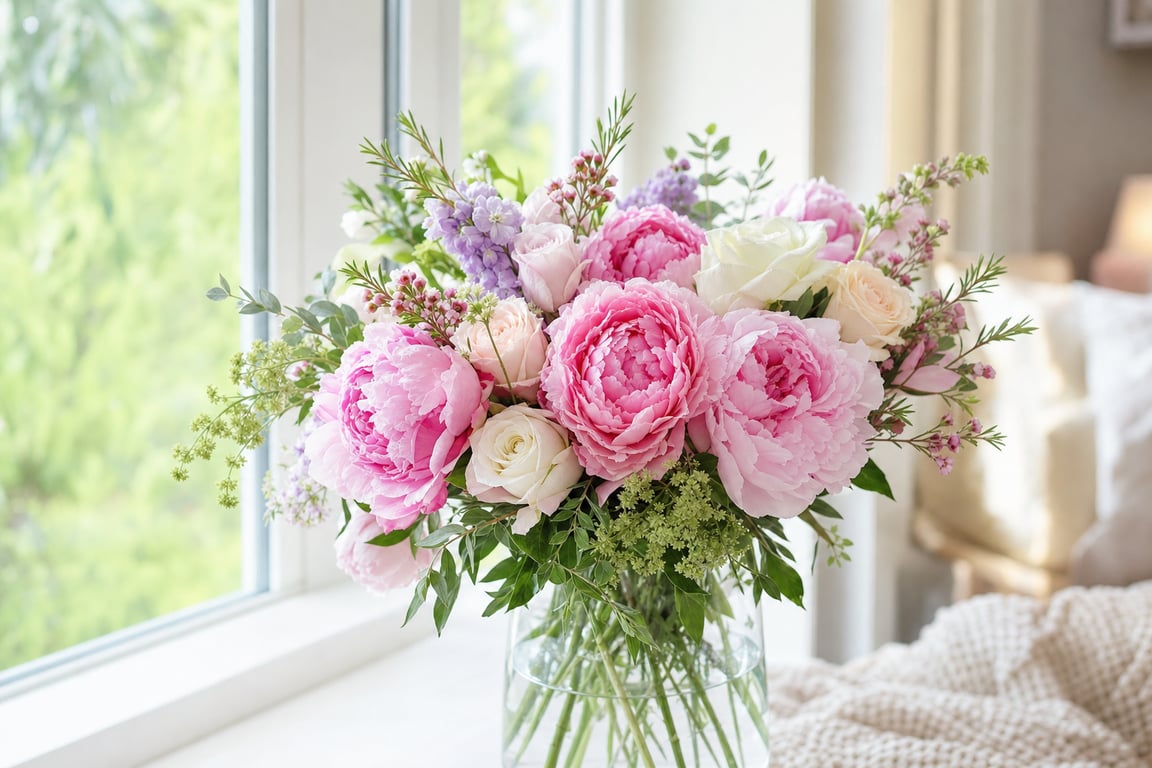
There are few nicer surprises than being handed a beautiful bouquet. The only sad part comes a few days later, when the petals start to droop and fade. Here's the thing, though: how fast cut flowers wilt isn't really down to luck. It comes down to a handful of small habits in the first few minutes after you bring them home.
Florists like to say it simply — a cut flower is a plant that drinks. Help the stems take up water, keep that water clean, and the very same bouquet will easily last several days longer. None of it is fussy. Five minutes on the day you receive them is enough.
So once your bouquet is home, work through the steps below.
1. Take the Wrapping Off Early
Gift bouquets come beautifully wrapped, but that plastic and paper can suffocate the flowers. Moisture builds up inside, and damp petals and stems turn mushy fast. Once the flowers are home, take the outer wrapping and plastic off fairly soon so they can breathe.
That said, if you'd like to keep the bouquet's shape to enjoy as-is, you don't have to untie the ribbon around the stems right away. Just removing the outer plastic is enough.
2. Trim the Stem Ends at an Angle
Before the flowers go into water, trim about 1–2 cm off the bottom of each stem. The key is to cut on a diagonal, not straight across.
An angled cut exposes more surface area, so the stem takes up water more easily. It also stops the end from sitting flat against the bottom of the vase and sealing itself off. If you can, use sharp scissors or a knife and make one clean cut.
3. Strip the Lower Leaves
Pull off any leaves that would sit below the waterline once the flowers are in the vase. Submerged leaves rot quickly, and as they break down they feed bacteria in the water. That bacteria then clogs the stems and blocks them from drinking.
Leaves above the waterline are fine to leave on. You only need to clear the ones that would end up underwater.
4. Use Clean Water — and Change It Often
The single most important factor in how long flowers last is, surprisingly, the state of the water.
- Wash the vase well before you use it. Old residue or a slick film left from last time is a breeding ground for bacteria.
- Change the water for fresh every day, or at the very least every other day.
- Each time you refresh the water, give the stem ends another small diagonal trim if you can.
When the water turns cloudy or starts to smell, that's your cue it's overdue for a change.
5. Keep Them Away from Heat, Sun, and Drafts
Flowers like things cool and steady.
- Direct sunlight on a windowsill tires them out quickly.
- Warm air near a heater or radiator does the same.
- Avoid spots where air-conditioning or a fan blows directly on them. Moving air pulls moisture out of the petals fast.
Find a relatively cool spot, out of any direct draft, and your flowers will hold up noticeably longer.
6. Don't Set Them Next to Fruit
This one catches a lot of people out. Ripening fruit like apples and bananas gives off a gas called ethylene, and that gas makes flowers wilt faster.
So it's best not to park the vase beside the fruit bowl on the counter. Keep flowers and fruit a good distance apart.
7. Use the Flower Food If There's a Packet
Many bouquets come with a little sachet of flower food tucked in. It helps the stems take up water and slows the growth of bacteria at the same time.
If yours included one, don't toss it — mix it into the water. Just dissolve the amount listed on the packet and you're set.
Quick summary: remove the wrapping → trim stems on a diagonal → strip the lower leaves → clean water → a cool spot.
A bouquet you've been given is, in a way, someone's good wishes made visible. A few minutes of care on the day it arrives can keep those wishes on your table a whole week longer. If there's a bunch of flowers nearby right now, why not tend to it before it starts to fade?