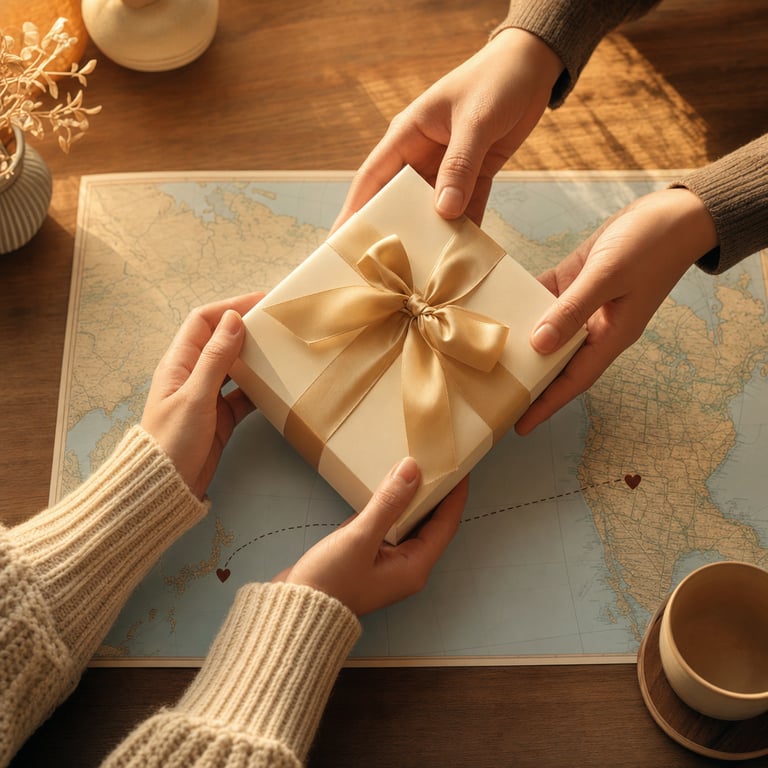
National Grandparents Day Is Three Weeks Away — Here's How to Actually Get a Gift to Korea in Time
Published on August 24, 2026
You've probably already done the math. National Grandparents Day falls on September 13 this year, and if you're anything like the Korean-Americans I talk to, you're now staring at a blank text thread wondering how you're supposed to get anything — a card, a box, a gesture — from Los Angeles or Chicago to your halmoni's apartment in Daegu before then.
Here's the thing nobody tells you the first few times you try: physical shipping to Korea from the US typically runs two to three weeks once you account for customs processing, and that's if nothing gets held up. September 13 is nineteen days out as I'm writing this. You could order something today and still watch the tracking number sit in "arrived at international facility" purgatory until October.
So you start looking for another way. Maybe you've tried Venmo before (doesn't work outside the US), maybe you've tried mailing cash in a card (risky, slow, and honestly a little sad for an 80-year-old to have to walk to the bank to deposit). If you've gotten this far, you already know the standard options don't translate well across the Pacific. What actually works is less about finding a faster shipping carrier and more about understanding how gifting works once it lands in Korea.
Grandparents Day Doesn't Really Exist in Korea — And That's Fine

First, a small cultural note that trips people up: there's no Korean equivalent of the US National Grandparents Day. Korea has Parents' Day (어버이날) in May, which covers both parents and grandparents in most families' minds, but nothing tied to the second Sunday after Labor Day.
This matters because if you call your grandmother and say "happy grandparents day," she might be a little confused — not offended, just puzzled, the way she'd be if you wished her a happy Thanksgiving in July. That's okay. You're not trying to import an American holiday into her calendar. You're using a date that's meaningful to you as the occasion to reach across the distance. Frame it that way in your message — "I know this isn't really a thing there, but it made me think of you" — and it lands as thoughtful rather than confusing.
The Real Obstacle Isn't Distance, It's the Handoff
The part that actually stalls people isn't the ocean between you. It's the last ten feet — getting something from a digital purchase into your grandparent's hands in a form they can actually use.
Older relatives in Korea are often more digitally connected than people assume. Most use a smartphone daily, mostly for one thing: KakaoTalk. It's not just a messaging app there — it's how an entire generation checks in with family, shares photos of grandchildren, and increasingly, sends and receives small digital gifts. If your grandmother has ever sent you a photo of her lunch or a good-morning sticker, she's already comfortable with the exact interface you'd use to send her something back.
This is different from trying to get her to install a Western app, create an account, or navigate an English-language checkout page. The gifting motion — someone sends you a link, you tap it, you claim something — is already familiar. You're not teaching her new behavior. You're using a channel she already opens ten times a day.
What "Sending a Gift Card Internationally" Actually Looks Like Here
If you search for how to send a gift card internationally, most of what comes up assumes you're sending within one country, or that the recipient shops on the same platforms you do. Cross-border gifting to Korea works differently, and once you see the shape of it, it stops feeling complicated.
The mechanics are roughly:
You pick something modest and practical — the kind of thing that doesn't require her to guess what you meant. A coffee shop credit she can use with her Tuesday morning group. A grocery store card she can use on her regular shopping trip. Something that turns into an errand she was already planning to run, just slightly nicer that day.
You send it as a digital gift tied to her phone number or her KakaoTalk profile, not a mailing address. There's no package to intercept, no customs form, no waiting for a delivery truck that may or may not find her building's correct entrance (a genuinely common problem with older apartment complexes in Korea that don't map cleanly to Western delivery apps).
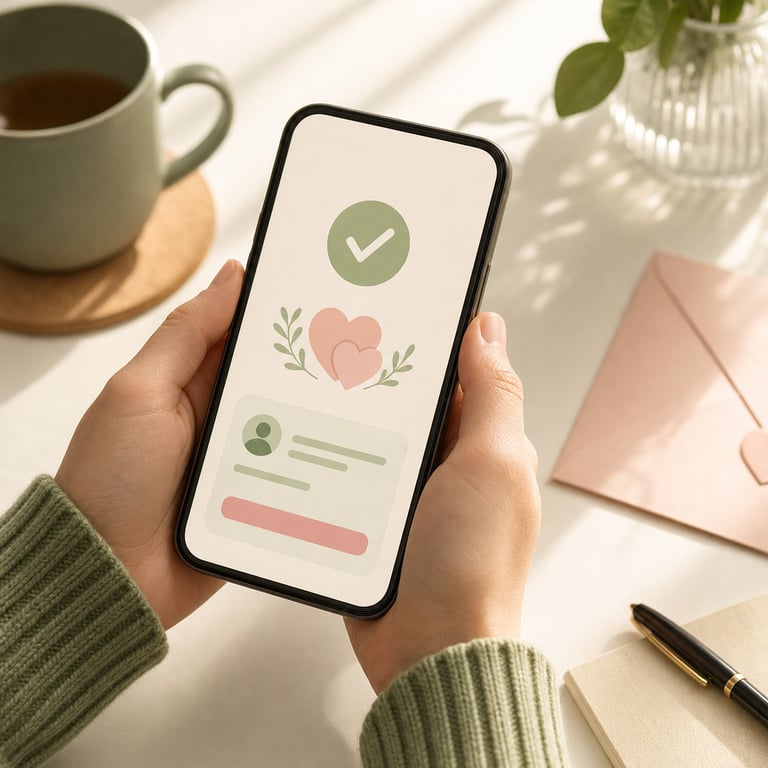
She gets a notification, opens it the way she'd open any message from you, and either the app itself walks her through redeeming it, or — better — you call her five minutes after sending it and walk her through the two taps together. That call ends up being the actual gift. The card is just the reason you called.
This is the piece people underestimate. A cross-border gift that requires zero technical explanation on a call is nice. A cross-border gift that gives you an excuse to call and hear her voice explain what she's going to do with it — that's the version people actually remember.
Timing It So It Doesn't Feel Like an Afterthought
Because the delivery is instant once you send it, there's a temptation to leave this until September 12th at 11pm. Resist that. Not because the technology will fail — it won't — but because a gift that arrives with three weeks of forgotten intention behind it feels different from one that arrives on time and unhurried.
A better approach: pick your date now, put a reminder in your phone for September 11th or 12th, and use the gap between now and then to do the one thing shipping never let you do anyway — ask her what she actually wants. Call this week, mention you're thinking about her, and let the conversation naturally surface what would be useful. Maybe she mentions she's been wanting to try a new café near her place. Maybe she just did her big grocery shop and mentions prices going up. Either one hands you exactly what to send, and it won't feel like you guessed.
For the Extended Family, Not Just Grandma
If you've got aunts, uncles, or your parents' generation also scattered between the US and Korea, this same approach scales without much extra effort. You're not managing separate international shipments to five different addresses with five different customs declarations. You're sending five small digital gifts from your phone in the same afternoon, each one picked for that specific person rather than a one-size-fits-all care package.
This is, incidentally, the same reason this method works just as well for a cousin's birthday in March or a random Tuesday when you just miss home — it's not a once-a-year workaround, it's a channel you can use anytime the distance gets to you.
Before the Date Arrives
If this is your first time sending something to Korea this way, don't wait until the pressure of September 13 to figure it out. Try it small, this week, on nobody's deadline — send your grandmother something tiny just because, watch how she reacts, and you'll know exactly what to do when the actual day comes. Services built specifically for this kind of cross-border sending, like SodaGift, exist precisely because the standard options — PayPal, Venmo, international shipping — were never built with a Korean grandmother's Tuesday morning in mind.
Three weeks is enough time to get this right. It's not enough time to keep putting it off.