
How to Send an Amazon Gift Card to Someone in the US From Abroad (and What to Consider Instead)
Published on October 27, 2026
You're a few time zones away, your brother in Chicago just started a new job, and you want to send him something useful today. Not a package that spends two weeks in customs, and not a "just Venmo me" kind of money transfer that feels like paying back a debt. A gift card seems like the obvious answer, and Amazon is the first name that comes to mind.
That instinct makes sense. Amazon sells nearly everything, and almost everyone in the US has an account. But sending an Amazon gift card from outside the country has a few snags that aren't obvious until you're at checkout. And the "most useful" gift for someone in the US isn't always the one with the biggest catalog.
As of October 2026, here is how I'd think it through: what to check before you buy an Amazon card from abroad, what tends to go wrong, and which alternatives fit the person you're sending to.
What to Check Before Sending an Amazon Gift Card From Abroad

1. Make sure it's the right Amazon
Amazon gift cards are tied to a specific country's store. A card from Amazon.com (the US store) works on Amazon.com. It generally does not work on Amazon's Canadian, UK, German, or other country sites, and the reverse is true too.
This is the most common mistake people make when they live abroad. If you open your local Amazon site and buy an e-gift card there, your recipient in the US may end up holding a card they can't spend on their own account. Before you pay, confirm that the card is for the US marketplace and that you're buying it from the US store.
2. Expect friction at checkout
Buying from the US store while living elsewhere can get messy. Depending on your account's home region and the billing address on your payment card, checkout can stall, ask for extra verification, or decline a card that works everywhere else. This doesn't happen to everyone, but it happens often enough that you shouldn't leave it to the last minute. If the gift is for a birthday, try the purchase a few days early so a declined payment doesn't ruin the timing.
3. Warn the recipient first
This one is easy to overlook. Amazon gift cards are the most common tool in gift card scams, so Americans have been taught, repeatedly, to be suspicious of unexpected codes. If your sister in Dallas gets an email with a long alphanumeric string from an unfamiliar sender, her first reaction may be to delete it.
Send a short text before the gift goes out: "Check your email around noon, I'm sending you something." That one line avoids a lot of confusion, and the card is more likely to be used.
4. Think about what they'll actually buy
An Amazon card covers a lot of ground, but it can feel impersonal. If you're sending to someone who already orders from Amazon twice a week, a card just becomes grocery money they don't notice. If you want the gift to register as a gift, it helps to match it to a moment in their day.
Match the Card to the Person

The strongest gifts for people in the US usually do one thing: they remove a small daily cost or a small daily chore. Here is how that plays out for different recipients.
The friend or relative who is always busy: Uber Eats or DoorDash
If your recipient works long hours, has a new baby, or just moved to a new city, food delivery is a more thoughtful gift than it sounds. It says, "Tonight, you don't have to cook."
An Uber Eats gift card in the $50 range covers a couple of dinners. The $100 amount works well for a bigger gesture, such as a parent with a newborn or a friend who just had surgery. A DoorDash $30 card is a lighter option, roughly one meal for two. These work best in cities and suburbs with plenty of restaurants, so they fit most metro areas but may be less practical for someone in a very rural area.
The coffee person: Starbucks
Starbucks is the safest low-stakes gift in the US. Almost everyone lives within a short drive of one, and the cards are available in amounts from $10 up to $100.
A few ways to think about the amount:
- $10 to $20: a thank-you, a "thinking of you," or a small gesture for a coworker.
- $30 to $50: a birthday gift for a friend, or something for a relative who stops in most mornings.
- $100: a proper present for someone who treats Starbucks like a second office.
Starbucks also fits a particular situation: a gift that arrives on the day it's sent. If you forgot a birthday by a day or two, a Starbucks card is a quick fix that doesn't look like a last-minute scramble.
The beauty lover: Sephora
Sephora is a strong choice for someone who takes skincare or makeup seriously. The $50 card is a good gift on its own for a birthday or graduation. The $200 amount is the one people tend to choose for bigger occasions, like a milestone birthday or a wedding gift for a close friend. The usual risk with beauty gifts is buying the wrong shade or the wrong product. A card avoids that entirely, and she picks exactly what she wants.
The person who needs something bigger: Macy's
For a larger gift, such as a wedding, a new apartment, a house gift, or a holiday present for a family member, a Macy's $200 card gives your recipient real choice. Macy's covers clothing, home goods, kitchenware, and bedding, which makes it a practical fit for life changes where people are buying a lot of things at once.
Something more personal: Victoria's Secret
For a partner or a close friend, a Victoria's Secret $100 card is a well-understood gift in the US. Because it's a card rather than a specific item, there are no sizing risks, and the recipient picks what she likes.
Why the "Where Does It Come From" Question Matters
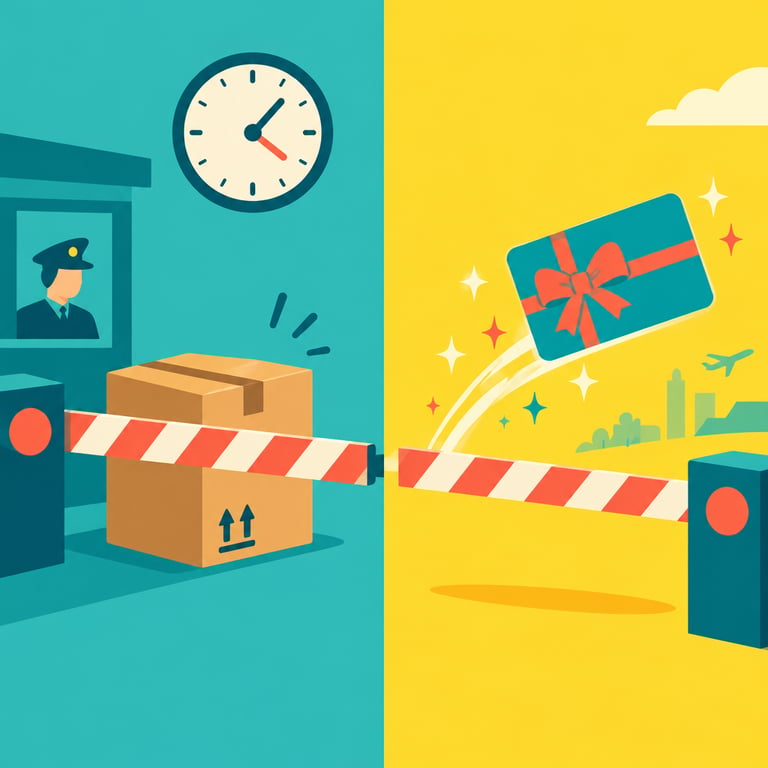
When you send a physical gift internationally, you run into shipping fees, long delivery windows, and customs. A digital gift card avoids all of that. There's no package to track, no extra shipping charge, and no import tax for your recipient to deal with. The card arrives digitally, usually within minutes, and the recipient can use it online or in store depending on the brand.
For a cross-border sender, that alone is a strong reason to go digital. The two things you can't control from abroad are timing and customs, and a digital card eliminates both.
It's also worth thinking about what your payment looks like on your end. When you buy a US-denominated card, the amount is a plain dollar amount. There's no guessing what your recipient will actually receive. A $50 card is $50, and that clarity makes it easier to budget. One cross-border gift service that works this way is SodaGift, which sells US dollar gift cards from brands like Starbucks, Uber Eats, DoorDash, Sephora, and Macy's for recipients in the US.
A Simple Checklist Before You Send

Whichever card you choose, a few quick checks will save you trouble:
- Confirm the card is valid in the US. Gift cards are almost always country-specific. A card for a US store should say so clearly before you buy.
- Pick something the recipient actually uses. Ask yourself where they were last week. If you don't know, a brief text asking "what's your go-to coffee order these days?" works better than guessing.
- Match the amount to the occasion. Small cards for gestures, mid-range for birthdays, larger for milestones. Going too small on a big occasion can feel off, and going too big for a casual one can make the recipient uncomfortable.
- Write a real message. A card with a short, specific note ("for the first week of the new job, coffee is on me") lands very differently from a card with no note at all.
- Time it. Think about the recipient's time zone, not yours. A message that lands at 3 a.m. their time can get buried. Scheduling it for morning in their city makes it feel intentional.
- Give a heads-up. Especially with anything that looks like a code in an inbox.
So, Should You Send Amazon at All?

Sometimes, yes. If your recipient mostly shops on Amazon, such as a student buying textbooks, someone setting up a new home, or a relative who orders household supplies in bulk, an Amazon card is practical. Just buy it from the US store, test the checkout early, and tell them it's coming.
But if you're choosing a gift rather than just moving funds, a card tied to a specific part of their routine often means more. A dinner delivered on a bad night, a coffee on the way to work, or a Sephora trip for a birthday feels closer to something you picked for them, rather than a general credit.
With Thanksgiving about a month away, many people living abroad are already thinking about how to reach family in the US without a rushed package. It's a good time to sort this out early. Text your recipient this week and ask one simple question: "Where do you actually spend money these days?" Their answer will tell you which card to send, and it'll make the gift feel considered before it even arrives.