
Corporate Gifting Across Borders: What Actually Works When Your Team Isn't in One Country
Published on September 24, 2026
Right now, if you're managing anything with people in more than one country, there's a decent chance half your team just went quiet. Chuseok wraps up in Korea this week, offices are closed, banks are closed, couriers are running on holiday schedules — and if you've ever tried to get something meaningful to a colleague or client there during this exact window, you already know the timing is brutal. You wait until the week before, discover the usual shipping option needs ten business days, and end up sending an apologetic Slack message instead of a gift.
This isn't really a Chuseok problem, though. It's a bigger one. If your team, your clients, or your contractors are spread across Seoul, Manila, London, and Los Angeles, "corporate gifting" stops being a simple errand and turns into a small logistics project every single time — birthdays, work anniversaries, a thank-you for closing a deal, year-end appreciation. Multiply that by however many people are on your list, and you start understanding why so many companies just default to "we'll figure it out later" and then never do.
I've watched founders and ops managers try to solve this the hard way — mailing physical boxes overseas, wiring cash through PayPal and hoping it converts sensibly, or asking a local employee to "just buy something and expense it." All three work, technically. None of them scale, and none of them feel as good as they should for either side.
Why "one gift, sent everywhere" doesn't actually work
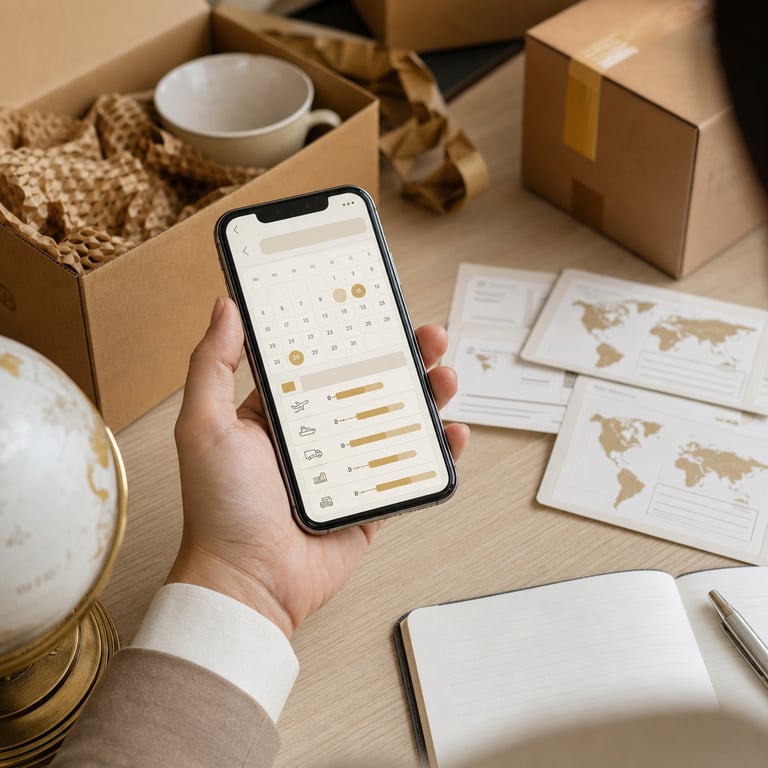
The instinct when you're gifting across borders is to find one thing — one gift card, one product, one bouquet — and send the identical version to everyone on the list, regardless of where they live. It feels fair. It's also usually the wrong call.
A US-issued retail gift card is often useless to someone in Korea or the Philippines; most retail gift card systems are locked to the country they were purchased in. A nice bottle of something shipped from LA to Manila might clear customs in three days or three weeks, and you won't know which until it's too late. Even something as simple as a coffee chain gift card assumes the recipient has that chain nearby — which, outside a handful of global cities, isn't always true.
What actually reads as thoughtful isn't uniformity. It's relevance. A gift that a colleague in Cebu can use at a store they actually shop at feels more considered than an identical-looking gift they can't redeem. The goal isn't "the same gift for everyone" — it's "a gift that works the moment they open it, wherever they are."
The logistics problem nobody mentions until you hit it
Here's the part that catches people off guard: even when you pick the right gift, getting it there is its own obstacle course. Physical shipping across borders means customs declarations, import duties that sometimes land on the recipient (which is its own awkward surprise), and delivery windows that don't account for local holidays you might not have on your calendar. Chuseok is a good example — three days of national shutdown in Korea that quietly stalls anything moving through customs or courier networks that week. Lunar New Year does the same thing across a good chunk of Asia. If your gifting calendar isn't tracking local holidays in every country you're gifting to, you will eventually send something that arrives a week after it mattered.
Then there's the payment side. Wiring money for "team appreciation" through a standard bank transfer means fees on both ends, exchange rate guesswork, and a multi-day delay that turns a same-day thank-you into a next-week thank-you. If you've ever tried to send a gift card internationally through a general-purpose platform not built for this, you've probably run into a version filtered for US or EU use only, with the country you actually need quietly unsupported.
None of this means cross-border corporate gifting is impossible. It means the default tools — the ones built for shipping products domestically or moving money between two accounts — weren't built for this specific job.
What actually works: digital-first, locally redeemable
The gifting approach that holds up across time zones tends to share two traits: it's digital by default, and it's redeemable in the recipient's actual market, not just technically deliverable to their address.
Digital gifting — think e-gift cards, mobile-load top-ups, or store credit tied to brands people already use locally — sidesteps almost every problem above. There's no customs form, no courier holiday backlog, no risk of an item arriving damaged after three weeks in transit. It shows up in an inbox or a messaging app the same day, sometimes the same hour, and the recipient decides what to do with it. That last part matters more than it sounds — letting someone choose removes the guesswork of "does this person even like coffee" that trips up so much cross-cultural gifting.

The "locally redeemable" half is just as important. A gift card that works at a chain your Manila-based contractor actually shops at, or one usable through a payment app your Seoul office already has installed, lands very differently than something technically valid but practically useless where they live. This is the detail that separates a gift that gets used from one that sits in an inbox unopened.
One category worth calling out specifically: instant messaging gift delivery. In markets where KakaoTalk or similar apps are the default way people communicate, sending a gift directly through that channel — rather than an email that might land in spam or get missed — measurably changes whether it gets opened same-day or ignored for a week. If you're managing a distributed team in 2026, the delivery channel is as much a design decision as the gift itself.
Building a repeatable system instead of a one-off scramble
The teams that handle this well aren't doing anything exotic — they've just stopped treating cross-border gifting as a fire drill every time it comes up. A few patterns worth borrowing:
They keep a simple running list of local holidays for every country they have people in, so nothing gets sent into a week-long shutdown by accident. They default to digital-first gifting for anything time-sensitive — a birthday, a closed deal, a "thank you for staying late on the launch" — and reserve physical shipping for the occasions where the extra lead time is already built in. And they batch recurring occasions (quarterly recognition, year-end appreciation, client anniversaries) instead of handling each one as a surprise that lands on someone's desk with three days' notice.
The businesses I've seen do this best also stop trying to personalize everything manually. Instead, they set a budget band per occasion and per country, and let the recipient choose within it — which, again, solves the "do they even want this" problem better than a procurement manager guessing preferences for forty people across four countries.
For smaller teams, this can look as simple as a shared spreadsheet with names, countries, and next occasion dates. For larger ones, it usually means adopting a platform built specifically for cross-border business gifting rather than duct-taping together a shipping account and a gift card website. One example of a service built around this exact use case is SodaGift, which focuses on instant, locally redeemable digital gifting across a number of countries rather than trying to be a general shipping solution retrofitted for gifts.
Where to go from here
If you're the person who ends up handling gifting for a scattered team — whether that's an official HR title or just "the one who remembers birthdays" — the fix usually isn't more effort. It's picking a system once and reusing it: a shortlist of digital, locally redeemable options per country, a calendar that accounts for local holidays, and a default channel for delivery that matches how people in each market actually communicate.
The next time someone on your team in Seoul, Manila, or anywhere else has something worth celebrating, you'll already know what to send and how it'll get there — no scrambling, no apologetic Slack message, no gift that shows up two weeks late because nobody checked the holiday calendar first.