
Chuseok Without the Flight Home: What Diaspora Families Are Sending Instead This Year
Published on September 7, 2026
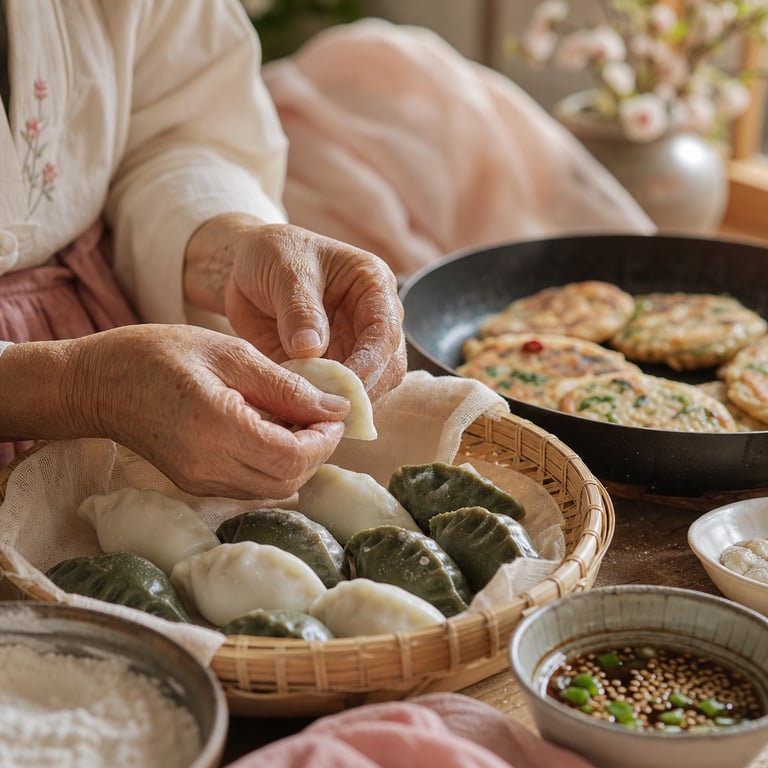
Eighteen days from now, your mom in Korea is going to spend an entire day cooking songpyeon and jeon for people who might not even show up until the food's gone cold. Your cousins will drive in from Daejeon. Someone will complain about traffic that started at 6am. And you'll be watching all of it through a grainy video call from your kitchen in LA, or Toronto, or wherever your life ended up, wondering if there's anything you can actually do about the fact that you're not there.
This is the third Chuseok in a row you've missed. The flights were $1,400 round trip last time you checked, work didn't budge, and honestly — even if you could go, three days isn't enough to justify the jet lag and the fight to get time off. So you do what a lot of people in your position do: you send money. A wire transfer, maybe a Venmo-adjacent app that promises to convert dollars into won. Your mom thanks you. And then you sit there feeling like you just paid a bill instead of celebrating a holiday.
If that feeling is familiar, you're not imagining it. There's a real gap between "I sent support" and "I sent something that felt like Chuseok," and it's worth talking about why — and what people are actually doing to close it.
The Problem With Just Sending Money
Cash is useful. Nobody's going to turn down cash. But Chuseok isn't really a cash holiday — it's a gift holiday. Historically, the point of Chuseok gifting in Korea was never about the monetary value; it was about choosing something specific for someone specific. Spam gift sets for the neighbor who helped fix your fence. Fruit boxes for the in-laws. A little something extra for the grandmother who still remembers everyone's birthday.
When you wire money instead, you're technically providing for the holiday, but you've also outsourced the choosing part — the part that actually says "I thought about you specifically." Your mom has to go buy her own thing with your money, which, if you think about it, is a strange inversion of what a gift is supposed to do.
There's also a practical wrinkle that a lot of people bump into for the first time around this holiday: gift cards don't cross borders the way you'd hope. If you're used to buying a gift card in the US and assume you can just "send a gift card internationally" to Korea, you'll hit a wall fast — a Starbucks card bought in Los Angeles is meaningless in Seoul. Store loyalty systems, currency, and even the app infrastructure are all region-locked. This is the exact frustration that pushes people toward services built specifically for cross-border digital gifting instead of trying to jerry-rig something with a US-issued card.
What Digital Gifting Actually Looks Like in Korea
Here's the part that surprises a lot of diaspora folks: in Korea, this problem was solved years ago, just not for people abroad. Digital gift cards — called gifticons — are a completely normal part of daily life there. People send them constantly, for reasons far smaller than Chuseok: a coffee gifticon as a thank-you, a convenience store voucher because someone helped you move a couch. It's baked into how Koreans use KakaoTalk, the messaging app basically everyone in the country already has open.
So when you're trying to send something meaningful for Chuseok, the format your mom or your uncle is most comfortable receiving isn't a Western-style e-gift card link in an email — it's a gifticon that shows up inside a chat they're already checking sixty times a day. The categories that actually get used around this holiday tend to be pretty consistent: coffee and bakery vouchers for the flood of visiting relatives, department store gift cards that let an older recipient pick out their own produce or hanbok fabric, and mobile top-up or grocery vouchers for practical, no-fuss support.
The reason this matters more than it sounds: your grandmother is not going to figure out an international wire app, and she's definitely not opening an unfamiliar email link from an unknown sender. But she opens KakaoTalk every single day without thinking about it. Whatever you send has to land where she already is, not where you assume she should be.
Timing Matters More Than You'd Think
One thing that trips up a lot of people sending gifts for Chuseok from abroad: they wait too long. Chuseok this year falls September 24th through 26th, and the emotional center of the holiday — when people actually gather, cook, and exchange things — happens in the day or two before the official dates, not during them. If you send something on the 25th, you've technically hit the holiday, but you've missed the moment your family was actually together to appreciate it.
The people who get this right tend to send things about a week ahead, sometimes with a note that says something like "open this before everyone gets there" — turning the gift into part of the preparation, not an afterthought that arrives after the dishes are already washed. If you're the type who sends the holiday message the morning of, this year might be worth trying a week earlier instead. It changes how the whole thing lands.

There's also a quieter version of this worth mentioning: Chuseok in Korea has real roots in honoring elders and ancestors, not unlike how some other countries observe grandparent-focused holidays around this same part of the calendar. If there's an older relative you specifically want to acknowledge — not just the household as a whole — a separate, smaller gift addressed to them by name tends to land differently than a general family gift. It doesn't need to be big. It needs to be theirs.
What This Looks Like for Non-Korean Diaspora Too
If you're Filipino, sending home right now might feel like it's colliding with an entirely different calendar — the Philippines slid into the "Ber Months" back on September 1st, and Christmas prep is already underway in a lot of households. That's a separate rhythm from Chuseok, but the underlying logic is the same: sending cash through a remittance app covers the obligation, but it doesn't carry the specificity of an actual gift. A grocery voucher timed to land right when your family's holiday budget gets tight, or a small mobile load top-up sent with a message rather than silently — these carry weight that a bank transfer doesn't, even if the dollar amount is smaller.
The common thread across both situations is this: the gap you're trying to close isn't logistical, it's emotional. You're not trying to solve "how do I get value from here to there." You're trying to solve "how do I make someone feel chosen when I can't be in the room." Those require different tools.
What Actually Helps
If you're staring down September 24th and trying to figure out what to do, a few things are worth keeping in mind. First, figure out where your family member actually lives digitally — probably KakaoTalk if they're in Korea, probably a messaging app tied to a specific remittance or e-wallet if you're sending to the Philippines. Whatever you send needs to arrive there, not in a format they'll need help opening.
Second, resist the urge to make it purely transactional. A gift card or gifticon with zero message attached reads almost the same as cash. The thing that actually makes someone tear up a little is the two-line message that comes with it — "saw this and thought of you," "wish I could be at the table," whatever's true for you.
Third, send early. The window where Chuseok actually feels like Chuseok is shorter than the official holiday dates suggest, and the same is true for most gifting occasions — the emotional peak happens in the anticipation and the gathering, not on the calendar date itself.
None of this fixes the actual problem, which is that you're not there and you wish you were. But it's a real difference between your mother opening her phone to a wire transfer notification and opening it to see that her daughter, three thousand miles away, thought about her specifically enough to pick something out. Cross-border digital gifting services — SodaGift being one option built specifically around Korean gifting formats like KakaoTalk gifticons — exist precisely because that gap between "sent support" and "sent a gift" is real, and worth closing if you can.
You can't book the flight this year. But you can make sure that when your family sits down to eat on the 25th, there's something with your name on it waiting in someone's chat, not just a number in their account.