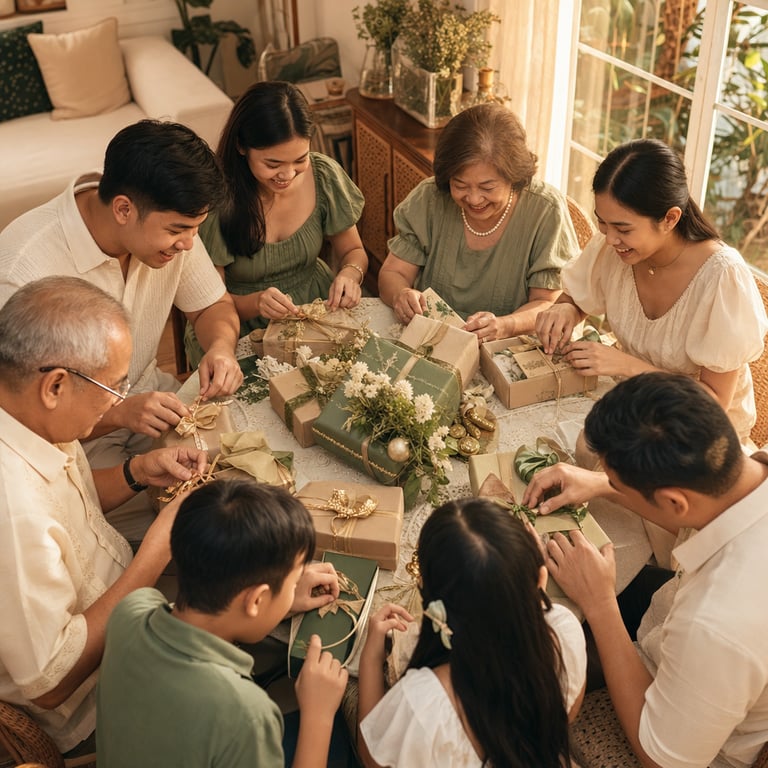
The Philippines' "Ber Months" Just Started — Here's What That Actually Means If You're Sending Gifts Home
Published on September 1, 2026
If you've got family in the Philippines, you already know the moment. Sometime around late August, someone in the group chat posts a meme about Jose Mari Chan, or your mom texts "Ber months na!" and suddenly it's Christmas season — even though it's still technically summer everywhere else you know.
For those of us living abroad — Fil-Am families in California, OFWs in the Gulf, nurses in London, engineers in Vancouver — this isn't just a cute meme. It's the unofficial start of four months of financial planning, family obligations, and the quiet pressure of being the one who sends something back. If you've ever tried to figure out when to start sending money or gifts home for the holidays, only to realize your relatives have already been in Christmas mode since the first of September, this one's for you.
Wait, "Ber Months"? What Is That, Exactly?

Quick context for anyone newer to this: the Philippines is famous for having the longest Christmas season in the world, unofficially kicking off the moment the calendar hits any month ending in "-ber" — September, October, November, December. It's not a public holiday. There's no law that declares it. You won't find it on an official calendar next to Independence Day or National Heroes Day. It's purely cultural — malls start playing carols, radio stations flip the switch, and families start budgeting for a season that's still three months away.
That distinction matters more than it sounds like it should. Because it's not an official holiday, there's no single date senders abroad need to circle. Instead, it's a window — and how you use that window says a lot about how prepared (or how frazzled) your December ends up being.
Why This Matters More When You're the One Sending From Abroad
Here's the thing that doesn't get talked about enough: for families still in the Philippines, Ber months mean four months to spread out Christmas spending — Noche Buena groceries, new clothes for the kids, a little extra for church donations, gifts for godchildren. It's a slow build.
For someone sending support from outside the country, though, the rhythm is different. You're not just budgeting for one Christmas expense — you're often the one absorbing the emotional weight of "did I send enough, did I send it early enough, did they actually see it as thoughtful or just transactional." A lot of OFWs and diaspora family members told us (informally, in the way these things get shared) that they end up sending money in December almost reflexively, in a lump sum, right when everyone else abroad is doing the same thing — which means fees are higher, transfer times are longer, and the gesture gets buried under a hundred other relatives doing the exact same thing that same week.
Ber months, used well, is actually an argument for the opposite approach: start earlier, spread it out, and let a September or October gesture land when there's less noise competing for your family's attention.
The Actual Rhythm of the Season, Month by Month
It helps to think of Ber months less as one long blur and more as four distinct beats, each with its own emotional logic:
September is anticipation. Nothing urgent is due yet, but this is when families start half-joking, half-serious about what they need for December. If you're going to send an early "just because, Christmas is coming" gesture, this is when it lands as delightfully unexpected rather than obligatory.
October carries a different kind of weight — this is typhoon season in much of the Philippines, and depending on the year, families may be dealing with storm damage, flooding, or disrupted income right when Christmas prep is supposed to be ramping up. A gift or transfer that arrives in October sometimes isn't about the holidays at all — it's about resilience.

Late October into early November brings All Saints' and All Souls' Day, when Filipino families travel — often significant distances — to visit and clean ancestral graves, reunite with relatives they don't see the rest of the year, and treat it almost like a smaller, earlier family reunion before the main event in December. It's a genuinely big deal logistically and financially, and it's easy for someone abroad to forget it's even happening, since it doesn't get much airtime outside the Philippines.
December, of course, is the main event — Simbang Gabi (the nine dawn masses leading to Christmas), Noche Buena on the 24th, and Media Noche on New Year's Eve. By the time December actually arrives, most of the emotional and financial lifting should already be behind you if you started paying attention back in September.
What This Means Practically, If You're Planning From the Outside
The biggest shift I'd suggest for anyone abroad reading this: stop treating "sending something for Christmas" as a single December event. Treat Ber months as a season with at least two or three natural checkpoints — an early September check-in, something around the All Saints' travel period in late October, and then whatever you do for Christmas itself in December.
This isn't about spending more overall. It's about timing what you already plan to send so it doesn't all collide with the same week every other relative abroad is also sending something. A transfer or gift that arrives in the last week of October, ahead of the All Saints' travel rush, often means more to a family covering transportation costs to the provinces than the same amount arriving on December 23rd buried under a dozen other Christmas greetings.
It's also worth being honest about a real, practical friction point: sending anything cross-border — cash, gift cards, physical packages — comes with real trade-offs. Balikbayan boxes take weeks and cost real money in shipping. Traditional remittance transfers can carry fees that eat into the amount that actually reaches your family. Digital options have gotten faster and cheaper over the past few years, but the landscape shifts often enough that it's worth re-checking your options each season rather than assuming the same service you used two Christmases ago is still your best bet in 2026.
A Season Worth Planning, Not Just Surviving
If there's one thing worth taking from this before September fully sets in: the length of the Ber months season is actually a gift to you, the sender abroad, even if it doesn't feel that way when the group chat starts buzzing. Four months is enough time to plan two or three smaller, well-timed gestures instead of one stressed-out scramble in mid-December. It's enough time to ask your family directly what would actually help this year, instead of guessing. And it's enough time to shop around for the sending method that actually gets the most value to them, rather than defaulting to whatever's fastest at the last minute.
Cross-border gifting platforms are increasingly built with exactly this kind of Filipino family in mind — one example is SodaGift, which is expanding its Philippines offerings ahead of this year's holiday season. Whether you end up using a service like that or sticking with what's worked for your family before, the real takeaway is simpler than any platform: the Ber months give you room to be thoughtful instead of rushed. Use the room. Your family will notice the difference between a gift that feels planned and one that feels like it arrived because the calendar finally forced your hand.