Why Back-to-School Season Hits Different From Abroad
Published on July 9, 2026
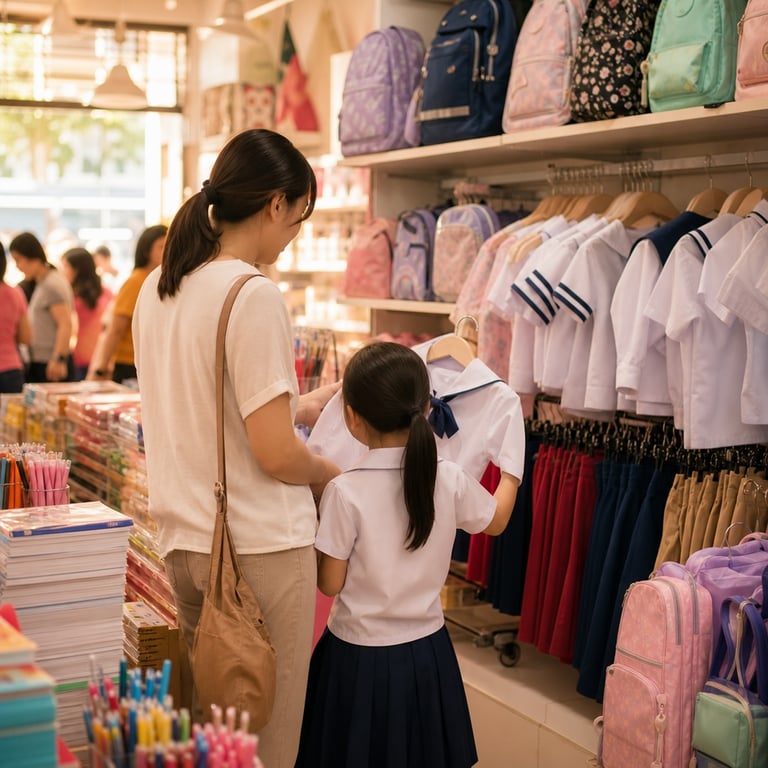
Your mom's message comes in around 9pm your time, which is already tomorrow morning in Manila. "Hi anak, si Ella magsisimula na sa Grade 3, kailangan niya ng bagong uniform at bag." Your niece is starting third grade. She needs a new uniform and a bag. Classes are already back in session — the Philippine school year runs from June through July into the new term — and somehow it's always a little more expensive than last year.
You're in Vancouver, or London, or somewhere in California, and your first instinct is to open your banking app and send money the way you always do. But you already know how that goes. There's a transfer fee, an exchange rate that never quite matches what the app promised, and then a day or two of waiting while your mother checks her account every few hours asking if it "went through na." By the time the money lands, the school supply store might be closed for the week, or your sister's already borrowed cash from a neighbor to cover it.
This is the part of being an OFW or a Filipino abroad that nobody prepares you for — not the missing-home part, which everyone talks about, but the logistics of showing up for your family's actual calendar from a completely different time zone and currency. Back-to-school season is one of those moments where the gap between "I want to help" and "the money is actually usable right now" becomes very real.
Why This Particular Week Matters
Philippine public and private schools don't run on the same calendar as the US or Canada. The academic year typically kicks off in June, but July is when the real costs pile up — uniforms that were "coming soon" in June finally need to be bought, school supply lists get longer once teachers actually meet the kids, and project fees start showing up that nobody warned you about in the group chat. If you have nieces, nephews, godchildren, or your own kids being raised by grandparents back home, this is the stretch where a little bit of flexible, fast money makes an outsized difference.
The problem isn't that you don't want to send it. It's that traditional remittance — the padala system most of us grew up watching our parents use — was built for monthly support, not "I need ₱2,000 by Thursday for a school project." It's built for pickup counters, IDs, and waiting in line at a Cebuana Lhuillier branch, which is a lot to ask of your 70-year-old lola who's already juggling three grandkids' school runs.
Why GCash Has Become the Default for a Reason
If you've sent money home in the last few years, you've probably already used GCash, or at least heard your family ask for it by name. It's less a "gift card" in the Western sense and more like handing someone digital cash they can spend almost anywhere in the Philippines — sari-sari stores, malls, online sellers, even paying school fees directly in some cases.
What makes it useful specifically for back-to-school moments is that it doesn't come with strings attached about what it has to be spent on. A ₱1,000 GCash load can become a uniform, or bus fare for the week, or your sister's mobile data so she can actually message you clear photos of the school supply list instead of a blurry one taken in a rush. A ₱3,000 load covers a full uniform set plus shoes with room to spare, which matters when your niece has grown two inches since last year and none of last year's stuff fits.
The part that actually solves the original problem — the waiting, the "did it go through" texts — is that GCash gift cards land in a phone number almost immediately once redeemed. There's no bank branch, no ID verification hoops for the receiving end, no multi-day float where your money is technically "in transit" but functionally nowhere.
Beyond School Costs: The Small Comforts That Matter Too
Not everything you send needs to be about tuition and supplies. Sometimes what your family needs during a stressful, expense-heavy month is something that feels like a treat rather than another bill. This is where it's worth thinking beyond GCash.
A Jollibee gift card sent the same week school starts is a small, specific kind of thoughtful — it says "I know this month is a lot, go get the kids Chickenjoy on me" in a way that a lump sum of cash doesn't quite communicate. SM Gift Pass works well if your family shops at SM for the bulk school run (uniforms, bags, shoes, notebooks often come from the same trip), functioning almost like store credit they can use across SM's retail network rather than cash they might feel obligated to save.
If your family relies on Grab for getting kids to and from school, or for grocery deliveries when everyone's too busy with first-week-of-school chaos to cook, a GrabGifts or GrabFood card covers rides and food delivery without you having to guess which specific errand it'll go toward. It's flexible in the way GCash is flexible, just scoped a little differently.
Worth noting: this is a different category from sending a generic Amazon or Target gift card, which is what a lot of us default to just because it's familiar. Those cards don't do anything for someone in the Philippines — there's no local redemption, no store network, no way to convert that value into a uniform from an SM branch down the street. The point of GCash, Jollibee, SM, and GrabGifts isn't just that they're digital and fast; it's that they're actually usable the moment they land, in the places your family already shops.
Matching the Gift to the Actual Person
Something I've learned from years of sending things home myself: the right choice depends less on what's most generous and more on who's receiving it and what they're already comfortable using.
If it's your mother managing the household budget, GCash in a denomination she can stretch — ₱1,500 to ₱3,000 — gives her the control to allocate it herself, which honestly, she probably prefers anyway. She's been managing this household long enough to know where the money needs to go better than you do from six thousand miles away.
If it's a niece or nephew old enough to have their own phone, something like a Jollibee or GrabFood card feels more like a direct gift to them specifically, rather than money that gets absorbed into "the household fund." Kids notice that difference more than adults think they do.
If it's an aunt or a family friend you're less close to but still want to acknowledge during a busy season, a smaller SM Gift Pass amount reads as thoughtful without being overly personal or presumptuous about their finances.
The Timing Problem, Solved Differently
Here's the thing about being the family member abroad: you're almost always one time zone and one currency behind the actual moment of need. By the time you've converted your paycheck, picked a remittance app, and waited out a transfer, the urgent school errand has often already been handled some other way — borrowed cash, a smaller substitute item, a delay that makes your niece the one kid without the right color folder on the first day.
What's changed for a lot of Filipino families abroad in the last few years is the option to skip that lag almost entirely. Services that sell Philippine gift cards and GCash loads directly — one is SodaGift — let you pay in your own card, in USD, and have the equivalent peso value land as a code on your family's phone within minutes rather than days. You know exactly what you're being charged before you check out; your family gets the local-currency value the moment they redeem it. For a back-to-school week where every errand has a small deadline attached, that speed isn't a luxury; it's the actual point.
What This Week Is Really About
None of this is really about the uniform or the ₱3,000. It's about your mom not having to borrow from a neighbor, your niece not being the kid whose bag is a year too small, and you not having to feel, from thousands of miles away, like showing up for your family requires a three-day logistics operation.
If someone in your life is navigating a school-supply list this week — or if you already know July always ends up being a heavier month for the people back home — this might be a good week to send something small and specific rather than waiting for the "big" occasion to justify it. Back-to-school doesn't get a card or a greeting in the way holidays do, but for the people actually living it, it matters just as much.